
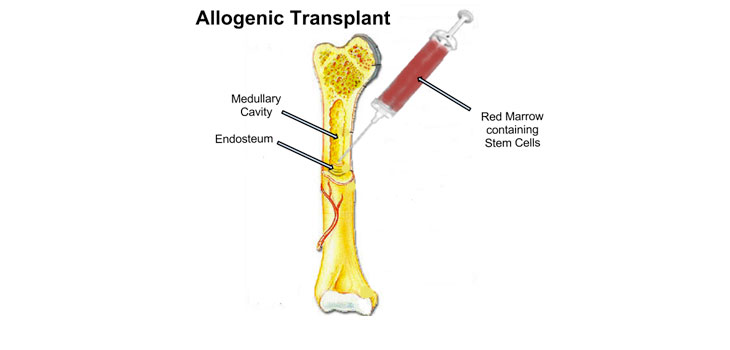
Houston, Texas, surgeon David Lintner, M.D., uses a slurry of stem cells to aid healing after his repair of a torn rotator-cuff. As reported on July 23 by Kyrie O’Connor for Chron (Houston Chronicle), Linter drills holes in his patient’s bone and extracts bone marrow. While Lintner is suturing the muscles and tendons that keep the shoulder stable to the bone, the bone marrow and blood from the holes in the bone is taken to the other end of the operating room where it is spun into a bloody slurry containing stem cells.
Stem Cells for Shoulder Repair
1 min read Premium comments
Secondary
When he has finished with tying down the tendons Lintner takes the prepared stem cell mixture and injects it into the shoulder. The prepared bone marrow, he says, which contains stem cells, platelets and growth factors, will act “like fertilizer” on the shoulder repair to accelerate healing. “There are lots of wonderful things in there that are helpful for healing, ” he says.
The patient, a man of 54, reported that he had full range of motion in his shoulder at three months and was 100% recovered at the end of four months. He had had the same operation on his other rotator cuff in 2009. The surgeon and surgery had been the same except that no stem cells were used in the prior operation. The patient said that it took him almost a year to recover from that surgery. The second repair also required much less physical therapy than had the first.
Author
React:
Discussion
This is a fascinating development. In my practice we've seen similar outcomes with the revised protocol. The key differentiator seems to be patient selection criteria. Has anyone else noticed the correlation with BMI thresholds?
Great point. I'd push back slightly on the conclusion, the sample size in the cited study is too small to draw population-level inferences. That said, the directional signal is compelling and worth a larger RCT.
We implemented a similar approach last year. Early results are promising but we're still gathering 12-month follow-up data. Happy to share our protocol if anyone is interested.
Join the conversation
Orthopedic professionals are discussing this. Sign in and upgrade to read every comment and add your voice.