
Work that Hungarian chemist Zoltan Takats began in 2002 in the United States and worked on at the Budapest Semmelweis Medical University and the Imperial College, London, has been acquired by U.S.-based firm Waters Corporation from Hungarian start-up firm MediMass Ltd. Called Rapid Evaporative Ionization Mass Spectrometry, the device is a knife that, in the hands of the surgeon, can tell the doctor what kind of tissue he is operating on.
Smart Knife Identifies Tissues as It Cuts
1 min read Premium comments
Secondary
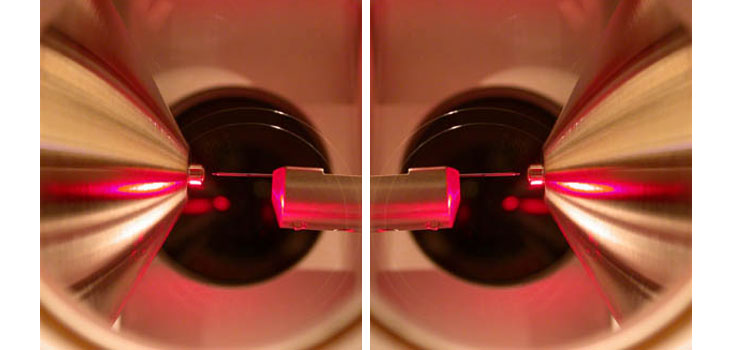
The knife combines two kinds of technology—mass spectrometry, which is a chemical analytical process, and electrosurgery. The electrosurgical knife sends up molecules in the form of smoke as surgeons operate. Takats directs these molecules directly to the mass spectrometer for testing and analysis.
Hungarian scientists say that the knife will enable surgeons to tell the difference between healthy tissue and a cancerous tumor in a split second as they operate.
Takats told Reuters, which released the story, that he was looking to have a prototype within two years. “At the moment we are able to produce not only the mass spectrometry information within about half a second, but also analyze it and identify the kind of tumor on which the surgeon is operating, ” Takats said. “This whole process can be done in 0.7 second at the moment.”
He pointed out to the Reuters writer that under normal circumstances, surgeons need to send off samples to a laboratory for analysis, and it takes about an hour in Hungary to get back the results.
Author
React:
Discussion
This is a fascinating development. In my practice we've seen similar outcomes with the revised protocol. The key differentiator seems to be patient selection criteria. Has anyone else noticed the correlation with BMI thresholds?
Great point. I'd push back slightly on the conclusion, the sample size in the cited study is too small to draw population-level inferences. That said, the directional signal is compelling and worth a larger RCT.
We implemented a similar approach last year. Early results are promising but we're still gathering 12-month follow-up data. Happy to share our protocol if anyone is interested.
Join the conversation
Orthopedic professionals are discussing this. Sign in and upgrade to read every comment and add your voice.