
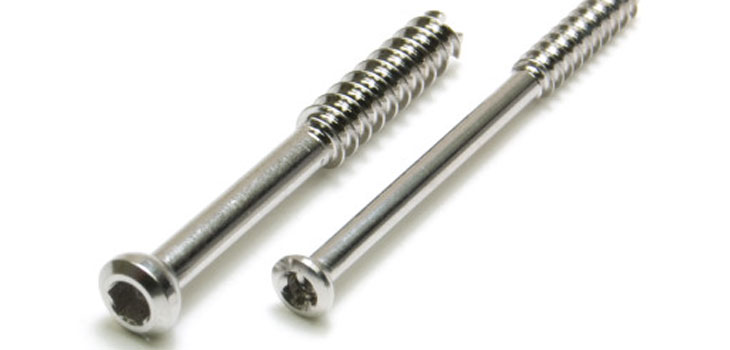
The headless 3 millimeter compression screw placed in a hip or knee costs $385 from one leading manufacturer. An upstart, based in Portland, Oregon, is selling that same screw for $90—a 76% reduction. Elizabeth Hayes, staff reporter for the Portland Business Journal, tells the story of Impact Medical and its founder and CEO, E.J. Duffy, who says that his orthopedic implants are made out of the exact same stainless steel as are those from other manufacturers.
Oregon Upstart Offers $90 Screw
1 min read Premium comments
Secondary
“We were able to reverse engineer a lot of products, ” Duffy told Hayes. “We get our competitors’ products, give them to our engineer and we find a manufacturer to build it to our specs. The point is, you can’t tell the difference between them.”
The market in which Duffy and his company, Impact Medical, participate has annual sales of more than 1.7 billion dollars. Impact Medical presently has customers in seven states.
The U.S. Food and Drug Administration has given Impact Medical clearance for numerous products: including 11 types of screws, two styles of plates for bone fixation and assorted K-wires and drill bits. Duffy says that more screws, plates, cables and an external fixator device are in the pipeline. Clearance by the FDA certifies that the company’s products are similar or better than products currently on the market.
Author
React:
Discussion
This is a fascinating development. In my practice we've seen similar outcomes with the revised protocol. The key differentiator seems to be patient selection criteria. Has anyone else noticed the correlation with BMI thresholds?
Great point. I'd push back slightly on the conclusion, the sample size in the cited study is too small to draw population-level inferences. That said, the directional signal is compelling and worth a larger RCT.
We implemented a similar approach last year. Early results are promising but we're still gathering 12-month follow-up data. Happy to share our protocol if anyone is interested.
Join the conversation
Orthopedic professionals are discussing this. Sign in and upgrade to read every comment and add your voice.