
Surgeons at a United Kingdom hospital are pioneering a new treatment that they hope will prevent the development of arthritis and extend athletes’ sporting careers.
New Treatment for Torn Meniscus
1 min read Premium comments
Secondary
The procedure, called ABICUS (Autologous Bone Marrow Implantation of Cells University Hospital Southampton), involves coating damaged cartilage with stem cells, taken from a patient’s hip, and mixed with gels, acids and surgical glue.
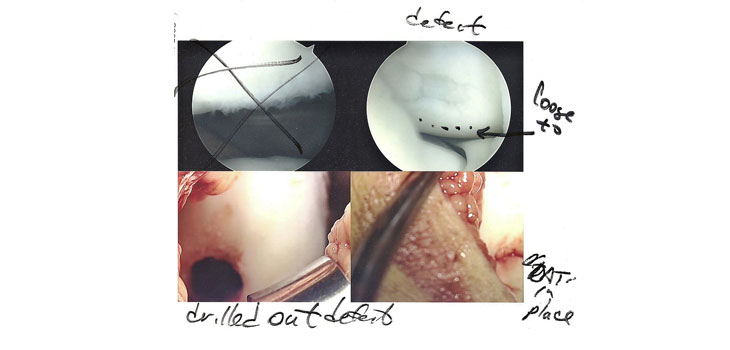
During the 30-minute procedure, the bone marrow sample is spun in a centrifuge in the operating theater to create a concentrated amount of the patient’s stem cells. The cells are then mixed with platelet gel, glue and hyaluronic acid to create a substance which is painted over the cartilage defect and allowed to set.
Microfracture is currently the most commonly used procedure to repair knee injury. This involves trimming damaged tissue and drilling holes in the bone beneath the defect via keyhole surgery to promote bleeding and scar tissue to work as a substitute for the meniscus.
Patients who undergo the ABICUS operation have their cartilage cut and also undergo microfracture but then have their remaining tissue treated with the stem cell applications.
Gorav Datta, a consultant orthopedic surgeon at Southampton General Hospital and the study’s principal investigator, said, “The development of this technique and the study we are conducting could revolutionize the treatment of common cartilage injury by creating a like-for-like, identical cartilage replacement for the first time.”
Around 10, 000 people a year in the UK suffer cartilage damage serious enough to require treatment. Victims experience pain, “locking” and reduced flexibility. If left untreated, it can progress to arthritis and severely impair leg movement.
Author
React:
Discussion
This is a fascinating development. In my practice we've seen similar outcomes with the revised protocol. The key differentiator seems to be patient selection criteria. Has anyone else noticed the correlation with BMI thresholds?
Great point. I'd push back slightly on the conclusion, the sample size in the cited study is too small to draw population-level inferences. That said, the directional signal is compelling and worth a larger RCT.
We implemented a similar approach last year. Early results are promising but we're still gathering 12-month follow-up data. Happy to share our protocol if anyone is interested.
Join the conversation
Orthopedic professionals are discussing this. Sign in and upgrade to read every comment and add your voice.