
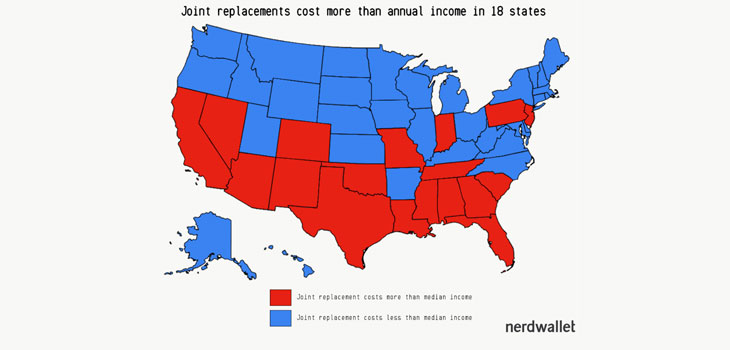
Anna Bernasek, writing in Newsweek Magazine, calls for more transparency by hospitals and doctors in their pricing of surgical procedures. In support of her call she quotes NerdWallet Health, which tracks 3, 200 hospitals and reports that the average cost of a hip or knee replacement at St. Joseph’s Medical Center in Yonkers, New York, is $17, 068. (On its web site, NerdWallet claims, “We help you find affordable health care, from the best insurance to the best hospitals.”)
Medical Care Costs Hidden From Consumers
1 min read Premium comments
Secondary
Thirty miles away, at Christ Hospital in Jersey City, New Jersey, the average cost for the same procedure is $139, 072. Bernasek writes that , “Both facilities are large, general medical and surgical hospitals in the New York City area, yet one charges about eight times as much as the other for the same basic procedure.”
She uses that fact to point out that the U.S. health care system is not a “well-functioning market.” Patients, she says, are kept in the dark and, while hospitals, doctors and insurers have a great deal of information about how much various items cost, they seldom share that information in a meaningful way with consumers.

The amount consumers have to pay shows up when the work is already done, she notes. The intricate arrangements of reimbursement and cost sharing by medical professionals and insurers are bewildering or even largely unknowable to patients who are unsure how to shop around for a doctor or hospital. For those who do investigate costs prior to their surgery there is no guarantee that, in the end, they will be charged the amount that they expect.
Bernasek looks to Obamacare to bring medical costs and prices more clearly into public view.
Author
React:
Discussion
This is a fascinating development. In my practice we've seen similar outcomes with the revised protocol. The key differentiator seems to be patient selection criteria. Has anyone else noticed the correlation with BMI thresholds?
Great point. I'd push back slightly on the conclusion, the sample size in the cited study is too small to draw population-level inferences. That said, the directional signal is compelling and worth a larger RCT.
We implemented a similar approach last year. Early results are promising but we're still gathering 12-month follow-up data. Happy to share our protocol if anyone is interested.
Join the conversation
Orthopedic professionals are discussing this. Sign in and upgrade to read every comment and add your voice.