
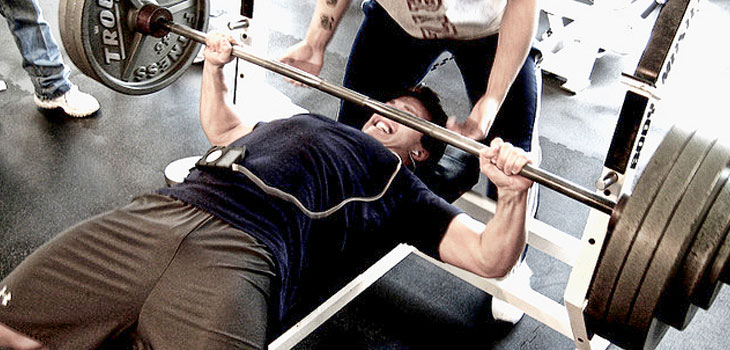
Although injury to the pectoralis major muscle is uncommon, doctors have seen more muscle tears in recent years due to an increased interest in lifting and sports. In 1989, Kretzler and Richardson1 conducted the largest series published to date, reporting 19 pectoralis major ruptures. In 2001, Hanna et al.2found about 114 cases of pectoralis major tears in the world literature. Despite the infrequency of pectoralis major injuries, those who suffer from a tear must endure lack of function and pain in the chest and upper arm. Care of the torn muscle usually consists of either surgical repair or conservative treatment.
Intratissue Percutaneous Electrolysis Mends Pectoral Tear
2 min read Premium comments
Secondary
The pectorals major muscle is located in the chest and is responsible for rotating, flapping, and swinging the arm. The two parts of the muscle originate from the sternum and clavicle and come together at the pectoralis major tendon, which attaches to the humerus bone. Injuries usually happen when the muscle is lengthened and contracted to its full extent and a sudden overload occurs, often in sports like weightlifting, wrestling, and football. Doctors use imaging technology to determine where the muscle is torn. An avulsion closer to the tendon usually requires surgical repair while myotendinous junction lesions, smaller tears, are frequently treated with conservative treatment. In order to investigate the effectiveness of using Intratissue Percutaneous Electrolysis (EPI) as a conservative treatment, the developers of EPI and their colleagues conducted a case study that was published in the Journal of Sports Medicine & Doping Studies in May 2014. Ferran Abat, M.D., Ph.D.; Pablo Eduardo Gelber, M.D., Ph.D.; Juan Carlos Monllau M.D., Ph.D.; and Jose Manuel Sanchez-Ibanez, P.T., Ph.D. from Cerede Sports Medicine and the University Autonoma of Barcelona authored the case study. Sanchez-Ibanez developed the EPI technique and now works with Abat at EPI Advanced Medicine, where they research and improve EPI technology.
The doctors treated a 30-year-old male patient with a significant tear in his pectoralis major. They first determined the location of the avulsion using ultrasound and radiographic imaging and performed a functional assessment on the patient. According to Tietjen’s classification, the patient had a type II injury to the mid-portion of the muscle. They then treated the patient using a weekly application of ultrasound-guided EPI, which applies a high-intensity galvanic current that encourages healing and regeneration in the targeted tissue. This technique reduces scarring and therefore reduces the risk of reinjury. The patient also performed eccentric exercises twice a week as part of the healing regimen.
Four weeks after the treatment began, the patient returned to the same pre-injury activity level, which was 8 points on the Tegner scale. According to the functional assessment detailed by Bak et al.3, the patient showed good results after 1 month and excellent results after 2 months. The rating remained at excellent for 12 months and the follow-up ultrasound showed correct arrangement of muscle fibers with no evidence of scarring. Although incidents of pectoralis major injury are rare, the Spanish doctors have shown that ultrasound-guided EPI is effective in treating a large partial tear of the pectoralis major muscle.
- Kretzler HH, Richardson AB. Rupture of pectoralis major muscle. Am J Sports Med1989;17:453–458.
- Hanna CM, Glenny AB, Stanley SN, Caughey MA. Pectoralis major tears: comparison of surgical and conservative treatment. Br J Sports Med2001;35:202-206
- Bak K, Cameron EA, Henderson IJ. Rupture of the pectoralis major: a meta-analysis of 112 cases. Knee Surg Sports Traumatol Arthrosc2002;8:113-119
Author
React:
Discussion
This is a fascinating development. In my practice we've seen similar outcomes with the revised protocol. The key differentiator seems to be patient selection criteria. Has anyone else noticed the correlation with BMI thresholds?
Great point. I'd push back slightly on the conclusion, the sample size in the cited study is too small to draw population-level inferences. That said, the directional signal is compelling and worth a larger RCT.
We implemented a similar approach last year. Early results are promising but we're still gathering 12-month follow-up data. Happy to share our protocol if anyone is interested.
Join the conversation
Orthopedic professionals are discussing this. Sign in and upgrade to read every comment and add your voice.