
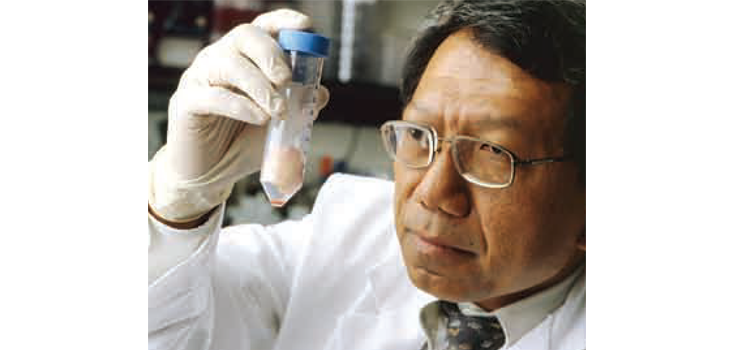
Rocky Tuan, M.D., director of the center for Cellular and Molecular Engineering and executive vice chairman for orthopedic research at the University Of Pittsburgh School Of Medicine, has reported using a novel 3D printing method to create the first example of a model for living human cartilage grown on a laboratory chip, according to Elizabeth Montalbano, writing for Design News.
Human Cartilage Grown on a Chip
1 min read Premium comments
Secondary
“The cartilage-bone junction is the part of the joint surface most affected by degenerative joint diseases, such as osteoarthritis, that represent the primary cause of physical disability, ” Tuan said. “Understanding the initiation and propagation of this degenerative process is crucial to the development of disease-modifying osteoarthritis drugs.”
He said that there is a great need for an osteochondral ‘tissue-on-a-chip’ system that will permit the study of both how the disease begins and progresses, and to discover potential therapeutic agents.
Tuan says that he has managed to create artificial cartilage on a chip by molding into shape thin layers of stem cells that are embedded in a solution that retains its shape and provides growth factors. Montalbano reported that Tuan uses a method of 3D printing that uses visible light, which preserves human cell viability and health. Common 3D printing methods use 3D deposition, which is likely to damage cells, Tuan said.
He explained, “We used projection stereolithography, which uses sequential, layer-by-layer photo cross linking to fabricate a 3D structure. By using photo-activatable natural polymers derived from native extracellular matrix, cells may be loaded in the solution, and are then encapsulated in the final hydrogel construct. This product is viscoelastic meaning it resembles native cartilage.”
Tuan says that he and his team will continue to build microtissue that can be applied to study any type of biological influences in joint health.
Author
React:
Discussion
This is a fascinating development. In my practice we've seen similar outcomes with the revised protocol. The key differentiator seems to be patient selection criteria. Has anyone else noticed the correlation with BMI thresholds?
Great point. I'd push back slightly on the conclusion, the sample size in the cited study is too small to draw population-level inferences. That said, the directional signal is compelling and worth a larger RCT.
We implemented a similar approach last year. Early results are promising but we're still gathering 12-month follow-up data. Happy to share our protocol if anyone is interested.
Join the conversation
Orthopedic professionals are discussing this. Sign in and upgrade to read every comment and add your voice.