
Carpal tunnel syndrome, besides being due to repetitive strain, may also be caused by hypothyroidism, according to a paper by doctors at Holtorf Medical Group, located in five cities around the U.S. They write that some hypothyroidism patients who struggle with carpal tunnel syndrome, “do not realize that there is a key connection between this painful nerve problem and their thyroid function.” They write that a patient’s symptoms may be a sign of an underactive thyroid and “the symptoms may resolve with proper treatment.”
Carpal Tunnel Syndrome and Hypothyroidism
1 min read Premium comments
Secondary
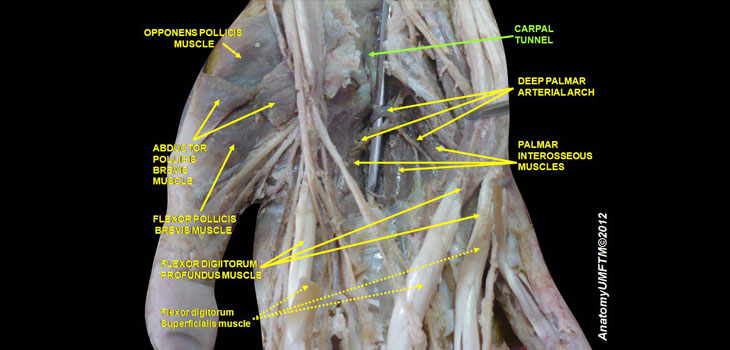
Carpal tunnel syndrome is a condition where pressure on the median nerve causes pain, numbness, tingling and weakness in the hand, fingers, wrist, and forearm.
Doctors at Holtorf Medical Group advise their patients suffering from carpal tunnel syndrome to ask their doctors for a thyroid panel which, they say, should include “Thyroid Stimulating Hormone (TSH), Free T4, Free T3, and Thyroid Peroxidase Antibodies (TPO) at minimum.”
They advise their patients that, even if their doctors report that “your tests were normal” that is not enough information. They write, “ask for actual numbers, and know that optimal thyroid levels are typically a TSH level below 2.0, and Free T3 in the higher end of the reference range.”
Treating carpal tunnel syndrome, they wrote, involves, “eliminating repetitive stress movement triggers when present, night splints to immobilize the wrist, nonsteroidal anti-inflammatory drugs, corticosteroid injections to reduce inflammation and surgery.”
Author
React:
Discussion
This is a fascinating development. In my practice we've seen similar outcomes with the revised protocol. The key differentiator seems to be patient selection criteria. Has anyone else noticed the correlation with BMI thresholds?
Great point. I'd push back slightly on the conclusion, the sample size in the cited study is too small to draw population-level inferences. That said, the directional signal is compelling and worth a larger RCT.
We implemented a similar approach last year. Early results are promising but we're still gathering 12-month follow-up data. Happy to share our protocol if anyone is interested.
Join the conversation
Orthopedic professionals are discussing this. Sign in and upgrade to read every comment and add your voice.