
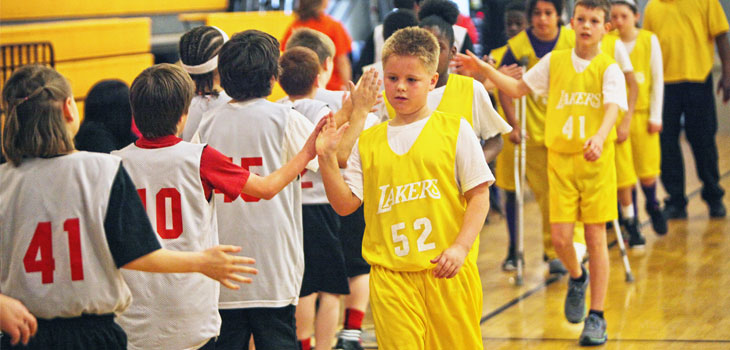
As many as 60 million children aged 6 to 18 years participate in some form of organized athletics, the National Council of Youth Sports reports—44 million of those children participate in more than one sport and 27 million youths engage in team sports. Although the positive aspects of sports participation, active lifestyle, peer socialization, building of self-esteem, certainly benefit the young people involved, there are potential drawbacks including risk of injury. An emphasis on competitive team selection for travel teams, collegiate recruiting, or national team membership has many young athletes focused on high intensity training at younger ages. In order to summarize risk factors, symptoms, and prevention for overuse and burnout injuries in youth sports participants, several American doctors published a position statement in the January 2014 issue of the Clinical Journal of Sports Medicine.
Be Mindful When Going for the Gold
John P. DiFiori, M.D.; Holly J. Benjamin, M.D.; Joel Brenner, M.D., M.P.H.; Andrew Gregory, M.D.; Neeru Jayanthi, M.D.; Greg L. Landry, M.D.; and Anthony Luke, M.D., M.P.H. evaluated 208 relevant medical sources about overuse and burnout injuries in young athletes. They defined an overuse injury as occurring “due to repetitive submaximal loading of the musculoskeletal system when rest is not adequate for structural adaptation to take place.”
Surveys estimate that 45.9% to 54% of sports injuries are overuse injuries. When evaluating likelihood for overuse injury, the doctors separated risk factors into intrinsic or extrinsic factors. Intrinsic factors, defined as innate biological or physical characteristics, include “variation in growth and development, anatomic alignment, muscle-tendon imbalance, flexibility, conditioning, biomechanics, and a history of prior injury.” Extrinsic factors, defined as forces related to the sport or mechanics of the activity, include “workload, sport-technique, training environment, and equipment.”
Of the various types of overuse injuries, high-risk overuse injuries can result in time lost from a sport and jeopardize future participation. High-risk injuries include stress fractures; physeal stress injuries, a widening of the joint’s physis; osteochondritis dissecans, where the cartilage at the end of a bone flaps loose; apophyseal injuries, inflammation in a tendon where it attaches to bond; and effort thrombosis or Paget-Schroetter syndrome, where blood clots form in veins deep within the arms.
Another symptom of overwork and stress in young athletes is burnout, a reaction to chronic stress or overtraining where an athlete no longer finds enjoyment in his or her sport. Burnout is usually characterized by loss of motivation or interest, lack of concentration, restlessness, anxiety, irritability, sleep disturbances, and decreased self-confidence. While rest is part of treatment, efforts should be taken to develop realistic expectations for young athletes.
In order to treat overuse injuries and burnout, the doctors suggested limiting the volume and intensity of workouts based on an athlete’s age and skill level. Preseason conditioning, neuromuscular training before practice, and regular participation in a resistance training program can help reduce the risk of injury. Equipment should be properly fitted and emphasis should be placed on improvement and skill development rather than competition and winning.
Author
Discussion
This is a fascinating development. In my practice we've seen similar outcomes with the revised protocol. The key differentiator seems to be patient selection criteria. Has anyone else noticed the correlation with BMI thresholds?
Great point. I'd push back slightly on the conclusion, the sample size in the cited study is too small to draw population-level inferences. That said, the directional signal is compelling and worth a larger RCT.
We implemented a similar approach last year. Early results are promising but we're still gathering 12-month follow-up data. Happy to share our protocol if anyone is interested.
Join the conversation
Orthopedic professionals are discussing this. Sign in and upgrade to read every comment and add your voice.