
OsteoSelect works as well as autologous bone in a rabbit posterolateral spinal fusion model.
Bacterin Bone Putty Effective For Fusion
1 min read Premium comments
Secondary
Gregory Juda, chief scientific officer for Bacterin International Holdings, Inc., the maker of OsteoSelect said a study, published in The Spine Journal, completed at the Integrated Spine Research Department at the Hospital for Special Surgery in New York, has, “shown equivalency in this preclinical model to autograft, the gold standard in bone grafting materials. We expect subsequent clinical research to further validate these findings.”
In an August 12, 2014 press release, the company said, “The study compared the efficacy of autologous bone, frequently referred to as the gold standard for achieving fusion, and Bacterin’s OsteoSelect DBM Putty in a commonly utilized animal model used to assess spinal fusion. The results showed equivalence between the two groups, based on biomechanical, radiographic and histological analyses, with the OsteoSelect group producing more mature fusion masses relative to autograft. These results may support a surgeon’s selection of OsteoSelect DBM Putty as an effective grafting material during spinal arthrodesis procedures, of which there are over 325, 000 annually in the United States.”
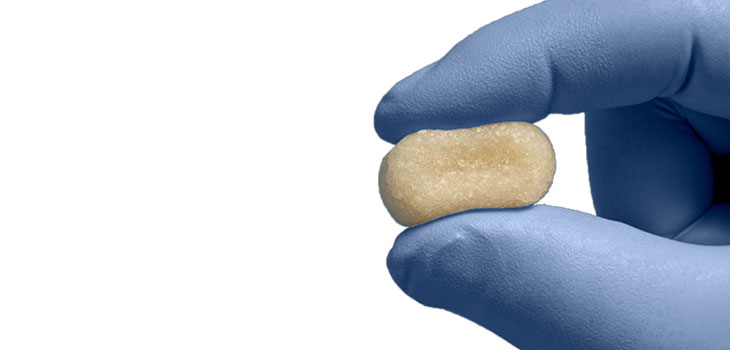
The putty is a malleable bone grafting material comprised of demineralized bone matrix (DBM) allograft combined with a polymer carrier material. The company said the product was engineered using feedback from key opinion leaders in several orthopedic specialties. The bone forming potential of every lot of OsteoSelect is confirmed after sterilization in an animal model thus providing surgeons with a bone grafting solution that is “both safe and confirmed to be biologically active.”
The news of the study comes just a week after The Journal of Foot and Ankle Surgery published clinical results of Bacterin’s OsteoSponge SC Allograft that showed positive clinical outcomes at two years post-op.
Author
React:
Discussion
This is a fascinating development. In my practice we've seen similar outcomes with the revised protocol. The key differentiator seems to be patient selection criteria. Has anyone else noticed the correlation with BMI thresholds?
Great point. I'd push back slightly on the conclusion, the sample size in the cited study is too small to draw population-level inferences. That said, the directional signal is compelling and worth a larger RCT.
We implemented a similar approach last year. Early results are promising but we're still gathering 12-month follow-up data. Happy to share our protocol if anyone is interested.
Join the conversation
Orthopedic professionals are discussing this. Sign in and upgrade to read every comment and add your voice.