
Arthrosurface, Inc.’s KISSloc Suture System has been given FDA 510(k) clearance.
Arthrosurface Self-Cinching Suture Cleared by FDA
2 min read Premium comments
Secondary
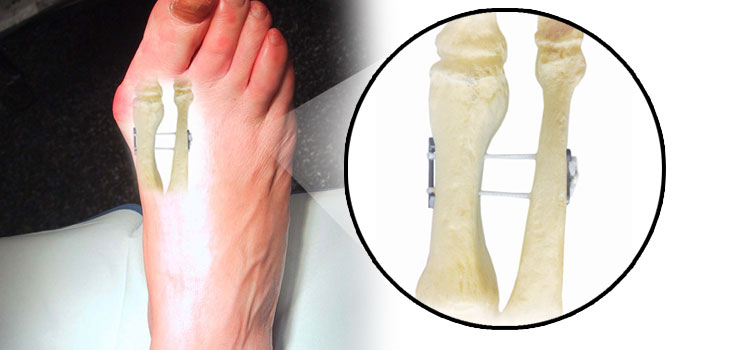
According to an August 25, 2014 company press release, the system is a mini plate and suture implant intended for the correction of a hallux valgus (bunion) deformity. It consists of two low profile plates and a self-cinching suture construct which reduces the intramedullary angle between the first and second metatarsal bones.
Bunion Deformity
A bunion is an abnormality of the big toe that is highlighted by enlargement of the metatarsal head and an abduction of the toe. The company says it is the most common foot deformity with data showing that approximately 23% of people aged 18-65 and 35% of people over the age of 65 have developed bunions. Wearing ill-fitting shoes over a long period of time is one of the main causes of bunions, although a patient’s genetic material may also contribute.
Recent peer-reviewed publications, according to the company, have reported various second metatarsal stress fractures associated with competitive suture–button fixation of hallux valgus. “The objective of the [Arthrosurface system] is to eliminate these failures by allowing more accurate bone tunnel placement, utilizing smaller bone tunnels and a more robust suture. These contribute to improving the ease of final implant placement and result in a more consistent repair, ” said the company statement.
Self-Cinching Suture Bridge
Carl Hasselman, M.D., from University of Pittsburgh Medical Center in Pittsburgh, Pennsylvania, commented on behalf of the company, “When we looked at the shortfalls in the existing designs we knew that if we could reduce the size of the bone tunnels while providing a stronger suture construct, we could improve patient outcomes considerably. However, I think the most important feature is how we were able to create a self-cinching suture bridge so surgeons can easily adjust the correction angle on each patient individually.”
The system is sterile packaged with completely disposable instrumentation. The small 1.2 mm bone tunnels, says the company, “significantly reduce the stress on the bone caused by larger holes while the low profile plates distribute the load across a larger area. Additionally, hallux valgus correction can be achieved with only one KISSloc construct instead of two separate suture bridges, creating an easy to use, cost effective system.”
The company expects to have the system on the market by the fourth quarter of this year.
Author
React:
Discussion
This is a fascinating development. In my practice we've seen similar outcomes with the revised protocol. The key differentiator seems to be patient selection criteria. Has anyone else noticed the correlation with BMI thresholds?
Great point. I'd push back slightly on the conclusion, the sample size in the cited study is too small to draw population-level inferences. That said, the directional signal is compelling and worth a larger RCT.
We implemented a similar approach last year. Early results are promising but we're still gathering 12-month follow-up data. Happy to share our protocol if anyone is interested.
Join the conversation
Orthopedic professionals are discussing this. Sign in and upgrade to read every comment and add your voice.