
It took a long time but the U.S. Federal Drug Administration finally approved Medicrea Group’s K-JAWS Cervical Compression Staple for all cervical fixation indications carried out with interbody cages. The company will be able to market its device in the United States after what its chairman, Denys Sournad, described as “the longest and most complex approval process it had ever had to administer.” He said that almost 5, 000 of the company’s units have been implanted in patients outside the United States since the products’ launch in 2006.
After Long Wait Comes Approval
1 min read Premium comments
Secondary
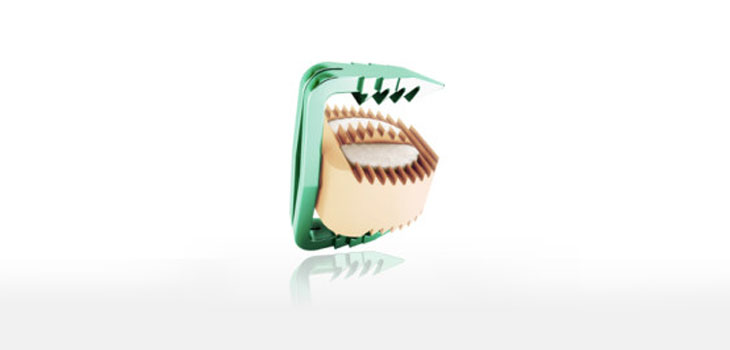
Medicrea officials say the K-JAWS implant is less invasive and quicker to insert than cervical plates currently on the market. Their press release states, “ Its principle, which consists in fixing two adjacent vertebra by compression around a previously-inserted interbody cage, results in exceptional stability thanks to the axial localization of the compression forces, at the level of the spine’s vertebral bodies.”
The K JAWS implant targets an American cervical fixation market that analysts estimated generates about $1.2 billion in annual sales. The cervical spine implant market is, say company officials, occupied by “relatively homogenous cervical plate and standalone cage ranges that differ little from each other.”
In 2009, Medicrea signed a licensing pre-agreement with a major American partner to market the product. Because of the longer than expected time taken to obtain FDA approval for the KJAWS, Medicrea officials say that the company is no longer bound by the agreement. Sournac said, “Over the coming quarters, we will therefore assess the various options open to us, external or internal, to market and promote our technology.”
Author
React:
Discussion
This is a fascinating development. In my practice we've seen similar outcomes with the revised protocol. The key differentiator seems to be patient selection criteria. Has anyone else noticed the correlation with BMI thresholds?
Great point. I'd push back slightly on the conclusion, the sample size in the cited study is too small to draw population-level inferences. That said, the directional signal is compelling and worth a larger RCT.
We implemented a similar approach last year. Early results are promising but we're still gathering 12-month follow-up data. Happy to share our protocol if anyone is interested.
Join the conversation
Orthopedic professionals are discussing this. Sign in and upgrade to read every comment and add your voice.