
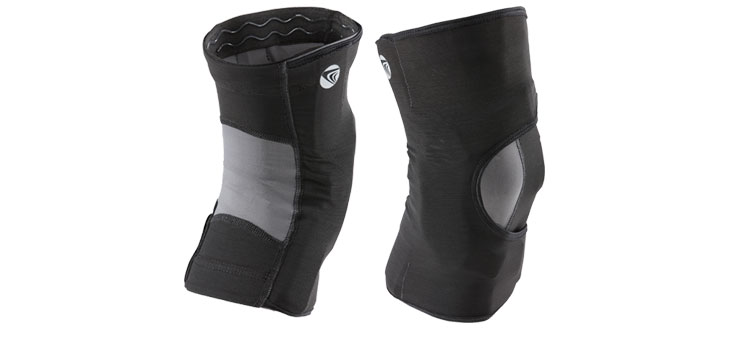
Breg, Inc., of Carlsbad, California, has launched a knee brace that, it claims, will help the 2.5 million runners who annually suffer from patella mal-tracking to return to their former active lifestyles. Called the FreeRunner, its maker claims that the brace acts on the anatomy of the knee in a manner different from other knee braces.
Runners Offered Redesigned Knee Brace
1 min read Premium comments
Secondary
“Working with Breg on this brace is my first experience with a manufacturer partnering with clinicians to design a better product, ” said Jill Monson, PT, Monson Orthopaedic Consulting, LLC. “The team really listened to relevant clinical needs and goals of patients, and helped develop a brace design rooted in known patellofemoral joint biomechanics.”
The brace weights just seven ounces. Its manufacturer claims that FreeRunner provides maximum stabilization of the patella when the leg is extended, helping to keep the kneecap in place when it is most vulnerable to dislocation. The brace offloads pressure when the leg is bent in flexion and the patella is not as unstable. This, they say, allows freedom of movement without sacrificing support. The brace incorporates breathable Smart-Zone™ compression fabrics that direct moderate compression for anatomic support where needed, and light compression over the patella and the popliteal space at the back of the knee for a non-binding fit.
“Patellofemoral braces have not changed much in the last 20 years, ” said Brad Lee, president and CEO of Breg. “Our new FreeRunner challenges the outdated way of bracing. It is highly functional, comfortable and non-binding during activity. We set out to make a brace that works and people want to wear. We believe we’ve achieved that goal.”
Author
React:
Discussion
This is a fascinating development. In my practice we've seen similar outcomes with the revised protocol. The key differentiator seems to be patient selection criteria. Has anyone else noticed the correlation with BMI thresholds?
Great point. I'd push back slightly on the conclusion, the sample size in the cited study is too small to draw population-level inferences. That said, the directional signal is compelling and worth a larger RCT.
We implemented a similar approach last year. Early results are promising but we're still gathering 12-month follow-up data. Happy to share our protocol if anyone is interested.
Join the conversation
Orthopedic professionals are discussing this. Sign in and upgrade to read every comment and add your voice.