
Zimmer Holdings, Inc. is recalling 41, 180 stemmed tibial components of the NexGen Complete Knee Solution system.
Over 40, 000 Zimmer NexGen Knee Tibial Components Recalled
2 min read Premium comments
Secondary
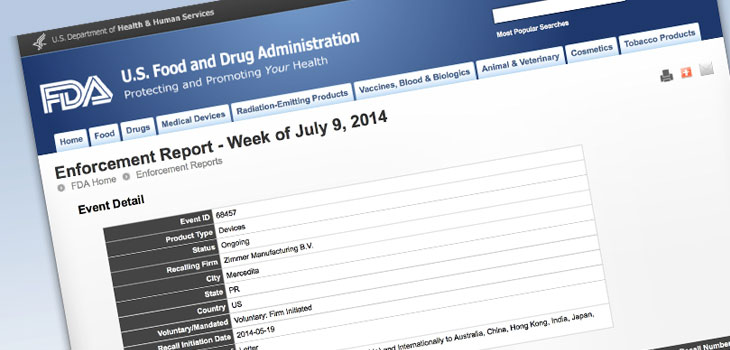
According to an FDA Enforcement Report for the week of July 9, 2014, the company is initiating a voluntary recall of specific identified lots “due to the potential that the threads may be out of specification.” The recall is of various sizes and part of the “NexGen systems of semi-constraint, non-linked condylar knee prosthesis.”
Recall Initiated May 19
The recall was initiated May 19, 2014 with a letter to relevant parties. The recall is considered a Class 2 recall, indicating the damaged device might cause temporary or serious medical complications. Zimmer sent out an urgent medical device recall letter to medical professionals on June 10. The components are manufactured by Zimmer Manufacturing B.V. in Puerto Rico.
In its letter to medical professionals, Zimmer reportedly said some of the tibial baseplates were made with defective threads in a hole where surgeons screw in a drop-down stem extension or stem plug. If not threaded correctly, the device could loosen and fail.
Complications
Zimmer said the problematic device could lead to one or more post-surgery complications:
- Infection: The patient runs the risk of serious infection if the surgery is delayed or if a secondary implant is not immediately available and the surgeon must close the patient and return later.
- Bone Loss: The patient may have additional bone loss if the tibial device is cemented in place and the surgeon must remove and replace it.
- Early Revision Surgery: If the device loosens or infection occurs, this could lead to revision surgery.
- Dislocation: If the stem is not properly placed, the devices may not adequately lock. This could lead to a dislocation.
According to drugwatch.com, the device is commonly used with other Zimmer knee replacement systems like the LPS-Flex and CR-Flex minimally invasive knee replacement devices. Surgeons install the tibial component during minimally invasive knee surgery, which has shorter recovery times, less blood loss and a greater range of motion because of tissue-sparing techniques. They assemble the component once the new knee is put in place. That tends to make the faulty pieces more problematic.
Complaints and Lawsuits
Within months of the company’s urgent device correction letter, drugwatch reports that the FDA received 114 complaints of early loosening and found that the company provided improper instructions and warnings about the device to surgeons. The FDA issued a Class 2 recall, affecting 68, 383 devices that had already been implanted.
Shortly after the FDA issued its recall, injured patients started filing lawsuits. A multidistrict litigation (MDL) was opened in the U.S. District Court of Illinois under the oversight of Judge Rebecca Pallmeyer.
Today, there are more than 1, 000 lawsuits. In an order issued in March 2014, Judge Pallmeyer identified six Zimmer NexGen bellwether trials (each side selected three cases) and scheduled the first bellwether cases for trial in February 2015.
Author
React:
Discussion
This is a fascinating development. In my practice we've seen similar outcomes with the revised protocol. The key differentiator seems to be patient selection criteria. Has anyone else noticed the correlation with BMI thresholds?
Great point. I'd push back slightly on the conclusion, the sample size in the cited study is too small to draw population-level inferences. That said, the directional signal is compelling and worth a larger RCT.
We implemented a similar approach last year. Early results are promising but we're still gathering 12-month follow-up data. Happy to share our protocol if anyone is interested.
Join the conversation
Orthopedic professionals are discussing this. Sign in and upgrade to read every comment and add your voice.