
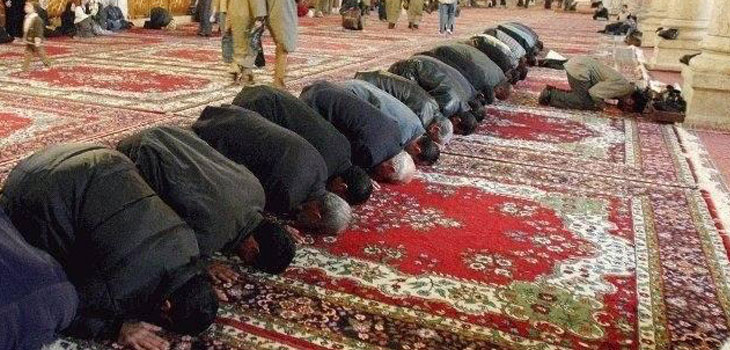
What group, in the whole world, suffers from the most degenerative knee problems? The answer? Muslims in the United Arab Emirates (UAE). Why? Because of a kneeling-to-pray culture. Jennifer Bell, writing in The National, quotes Peter Birch, a consultant orthopedic and knee arthroplasty surgeon at Abu Dhabi’s Mafraq Hospital, as saying, “In the UAE, knee arthritis is incredibly common. That is to do with a kneeling lifestyle because they pray and they put a lot of pressure on the knees. We think that is one of the biggest causes of it. If you are kneeling several times a day for the whole of your life, you are putting a huge strain on a joint that is not designed for that.”
Kneeling Lifestyle Hard on Knees
1 min read Premium comments
Secondary
Doctors have found that the actual anatomy of the knee is different in kneeling cultures when compared to non-kneeling cultures. Birch said, “Because they kneel from a very early age we think it [the knee] actually grows in a different shape because of the praying.”
Birch said that, while pressures to the knee by praying cannot be avoided, reducing other risk factors to joints such as obesity, which is a well-documented risk factor for the development of osteoarthritis, can help. According to Bell, more than 66% of men and 60% of women in the UAE are now overweight or obese. Khalaf Moussa, M.D., an orthopedic surgeon at Dubai Bone and Joint Centre, at Dubai Healthcare City, also blames a sedentary lifestyle. “You see a lot of people sitting around all day and of course this puts a lot of pressure on the joints, ” he said. Moussa estimates that about 60% of knee-replacement operations in the UAE are weight-related.
Bell quotes Birch as advising, “If you already have a high-risk population, try to reduce the other risks by improving diet, improving weight and better managing the early problems that can go on to cause arthritis. Give the knee the best chance it has.”
Author
React:
Discussion
This is a fascinating development. In my practice we've seen similar outcomes with the revised protocol. The key differentiator seems to be patient selection criteria. Has anyone else noticed the correlation with BMI thresholds?
Great point. I'd push back slightly on the conclusion, the sample size in the cited study is too small to draw population-level inferences. That said, the directional signal is compelling and worth a larger RCT.
We implemented a similar approach last year. Early results are promising but we're still gathering 12-month follow-up data. Happy to share our protocol if anyone is interested.
Join the conversation
Orthopedic professionals are discussing this. Sign in and upgrade to read every comment and add your voice.