
It has been 46 years since surgeons first performed a knee replacement surgery, according to Mail Online, a journal published in the United Kingdom. The publication reports that knee replacement surgery has become more accurate and less painful through the use of movement sensors by Zimmer, Inc. called iASSIST.
Knee Alignment Aided With iASSIST
2 min read Premium comments
Secondary
As writer Carol Davis explained, if a new knee is not lined up correctly with the hip and ankle it can both cause discomfort and an irregular pattern of wear. According to Davis, this happens in 10% to 15% of cases.
Nikhil Pradhan, M.D., consultant orthopedic surgeon at Warrington and Halton Hospitals NHS Foundation Trust, says that around 85% to 90% of the 80, 000 knee replacements performed annually in the UK have excellent results and patients are free from pain afterwards. “But some patients have ongoing pain, and the most common reason is that the knee replacement is not in a straight line between the hip and ankle. This means the load is on one side of the replacement knee, which can wear out more quickly and cause pain.”
According to Davis, the standard way to keep the hip, replacement knee and ankle in a straight line is for surgeons to insert rods into the bone during the operation. They insert a rod up to 30cm up inside the thigh bone and remove it when they judge that the replacement knee joint is in place.
Drilling into the cavity, known as the medullary canal, in the thigh bone means the patient loses blood and bone marrow.
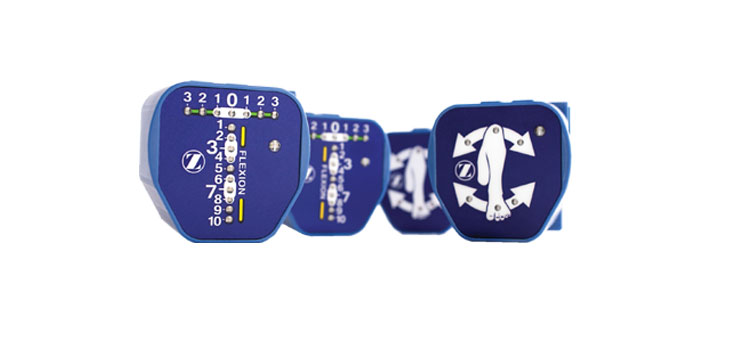
The manufacturer introduced the iASSIST knee system to the UK in March. Using it, surgeons can create a straight joint without using rods, or waiting for scans to make cutting blocks.
As Davis explained, the surgeon puts a tiny 1cm spike into the bottom of the thigh bone, and attaches a 2-3cm square pod to it. The pod contains a sensor that responds to movement, like the sensors in a Smartphone. The pod transmits information via Bluetooth to a computer—to help surgeons pinpoint exactly where to position the new joint.
The surgeon moves the patient’s knee through 12 positions, and the computer calculates when the joint is correctly centered.
Simon Donell, M.D., consultant orthopedic surgeon at Norfolk and Norwich University Hospital and president of the British Association for Surgery of the Knee, said of the device, ‘The iASSIST represents a further step in surgical guidance. Studies from the U.S. have shown that iASSIST gives a straight joint in 95% of patients, and can work for any patient.”
Author
React:
Discussion
This is a fascinating development. In my practice we've seen similar outcomes with the revised protocol. The key differentiator seems to be patient selection criteria. Has anyone else noticed the correlation with BMI thresholds?
Great point. I'd push back slightly on the conclusion, the sample size in the cited study is too small to draw population-level inferences. That said, the directional signal is compelling and worth a larger RCT.
We implemented a similar approach last year. Early results are promising but we're still gathering 12-month follow-up data. Happy to share our protocol if anyone is interested.
Join the conversation
Orthopedic professionals are discussing this. Sign in and upgrade to read every comment and add your voice.