
Mice from Duke University are shedding light on the role of omega 3 fatty acids in osteoarthritis. The research team, led by Farshid Guilak, Ph.D., Laszlo Ormandy Professor of Orthopaedic Surgery, found that mice given an omega 3 fatty acid supplement had healthier joints than those fed diets high in saturated fats and omega 6 fatty acids.
Duke Research: Omega 3 Fatty Acids May Help OA
2 min read Premium comments
Secondary
“Our results suggest that dietary factors play a more significant role than mechanical factors in the link between obesity and osteoarthritis, ” Dr. Guilak in the July 11, 2014 news release. The findings were published in the Annals of the Rheumatic Diseases on July 11, 2014.
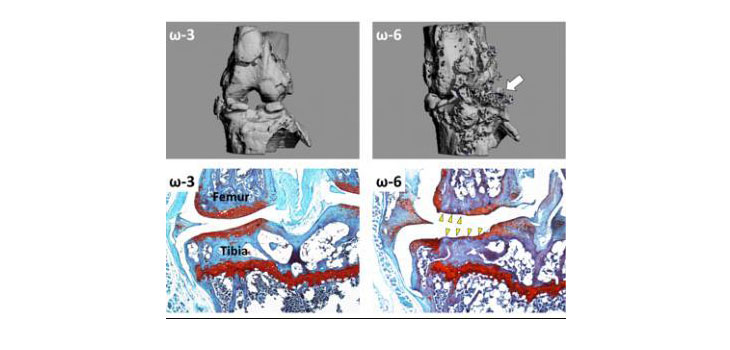
The Duke researchers focused on mice with osteoarthritis of the knee caused by injury to the joint. Mice in group A were fed a diet rich in saturated fat; those in group B received a diet rich in omega 6 fatty acids; those in group C ate a diet rich in omega 6 fatty acids which was supplemented with a small amount of omega 3 fatty acids.
“A healthy diet would include roughly equal ratios of these fats, but we’re way off the scale in the Western diet, ” Dr. Guilak said.
According to the news release, the researchers found that arthritis was significantly associated with the mice’s diets, but not with body weight. The mice that ate diets high in saturated fat or omega 6 fatty acids experienced significant worsening of their arthritis, while mice consuming a small supplement of omega 3 fatty acids had healthier joints.
“While omega 3 fatty acids aren’t reversing the injury, they appear to slow the progression of arthritis in this group of mice, ” said Dr. Guilak. “In fact, omega 3 fatty acids eliminated the detrimental effects of obesity in obese mice.”
Dr. Guilak told OTW, “We were very surprised that a relatively small supplement of omega-3 fatty acids completely eliminated the deleterious effects of obesity on a knee injury. We were also surprised to find that either omega-6 or saturated fat had similarly negative effects and significantly exacerbated the joint degeneration caused by a knee injury.”
“We are currently performing a study to determine the effects of weight loss on inflammation, knee pain, and osteoarthritis severity. Once that is complete, we hope to test the effects of different dietary fatty acids in a clinical setting.”
React:
Discussion
This is a fascinating development. In my practice we've seen similar outcomes with the revised protocol. The key differentiator seems to be patient selection criteria. Has anyone else noticed the correlation with BMI thresholds?
Great point. I'd push back slightly on the conclusion, the sample size in the cited study is too small to draw population-level inferences. That said, the directional signal is compelling and worth a larger RCT.
We implemented a similar approach last year. Early results are promising but we're still gathering 12-month follow-up data. Happy to share our protocol if anyone is interested.
Join the conversation
Orthopedic professionals are discussing this. Sign in and upgrade to read every comment and add your voice.