
Arthrosurface, Inc., a developer of joint restoration systems, has performed its first ToeMotion total toe surgery. Carl Hasselman, M.D., at the University of Pittsburgh Medical Center combined the new phalangeal implant with the HemiCAP metatarsal implants to create a total toe joint restoration.
Surgeon Creates Total Toe Joint Restoration
1 min read Premium comments
Secondary
“I have known for quite some time that the screw based fixation of the HemiCAP system is superior to any of the other press-fit solutions currently on the market. The instant fixation, immediate weight-bearing and early motion are critical to the excellent outcomes my patients have experienced with the Arthrosurface system over the past decade” said Hasselman.
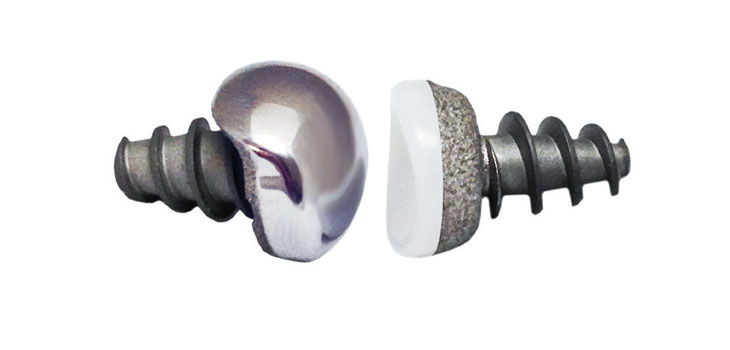
The ToeMotion Total Toe Restoration System was co-designed by Arthrosurface, San Giovanni, M.D. from Doctor’s Hospital in Miami, Florida and Hasselman. The device restores mobility and maintains native biomechanics using a dual curved HemiCAP implant and a new modular tray-style phalangeal implant with a threaded base plate. The fourth generation fixation components provide stable constructs on both sides of the joint.
Giovanni commented, “Today, patients are looking for an alternative to a toe fusion in order to preserve their mobility. Although toe fusion procedures can provide pain relief, they do not restore normal biomechanics and severely limit motion. Never moving their toe again is not a very appealing option to patients.”
Steve Ek, CEO of Arthrosurface said, “We expect the ToeMotion Total Toe system to be a game changer for those patients with arthritis of the 1st MTP joint. Proven fixation with implants that restore motion is a great new option.”
Author
React:
Discussion
This is a fascinating development. In my practice we've seen similar outcomes with the revised protocol. The key differentiator seems to be patient selection criteria. Has anyone else noticed the correlation with BMI thresholds?
Great point. I'd push back slightly on the conclusion, the sample size in the cited study is too small to draw population-level inferences. That said, the directional signal is compelling and worth a larger RCT.
We implemented a similar approach last year. Early results are promising but we're still gathering 12-month follow-up data. Happy to share our protocol if anyone is interested.
Join the conversation
Orthopedic professionals are discussing this. Sign in and upgrade to read every comment and add your voice.