
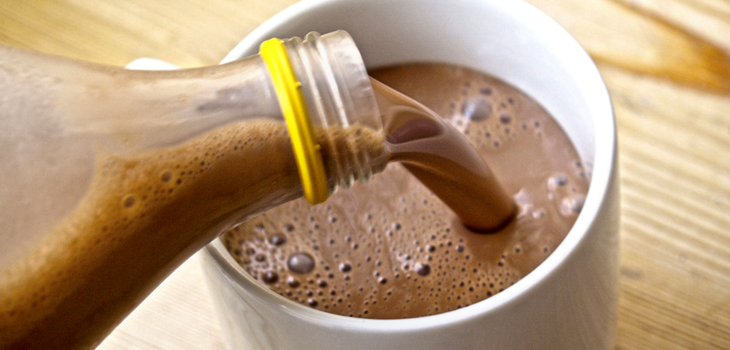
Swimmers—drink those cartons of chocolate milk. Researchers at Indiana University have found that when collegiate, trained swimmers recovered with chocolate milk after an exhaustive swim, they swam faster in time trials later that same day. On average, they shaved off 2.1 seconds per 200 yard swim, and 0.5 seconds per 75 yard sprint, compared to when they recovered with a traditional carbohydrate sports drink or a calorie-free beverage.
Chocolate Milk Gives Swimmers an Edge
1 min read Premium comments
Secondary
“Chocolate milk is an ideal recovery drink. It’s a ‘real food, ‘ has the right carb to protein ratio athletes need and it’s less expensive than many alternatives, ” said Joel Stager, Ph.D., lead researcher at Indiana University. “From cyclists to runners to soccer players, there’s a strong body of research supporting the benefits of recovering with chocolate milk. Now, our research suggests these same benefits extend to swimmers, ” he said. Competitive swimming is a sport where seconds and even tenths of a second can make a big difference and intense practice routines are the norm. Swimmers must be able to generate a quick recovery from multiple races within a single day.
This study is the first to test the benefits of chocolate milk in swimmers. After completing a debilitating swim the athletes recovered with one of three randomized beverages—reduced fat chocolate milk, commercial carbohydrate sports drink with the same calories as the chocolate milk, or a calorie-free beverage.
Following a five hour recovery period, the swimmers swam three performance test sets. Investigators found that there were significant differences in the aerobic and anaerobic swims, which indicated better recovery after drinking chocolate milk.
Stager says that he first studied chocolate milk because of its unique carb to protein ratio. He says that now more than 20 studies support the benefits of recovering after a hard workout with the high-quality protein and nutrients in chocolate milk.
Author
React:
Discussion
This is a fascinating development. In my practice we've seen similar outcomes with the revised protocol. The key differentiator seems to be patient selection criteria. Has anyone else noticed the correlation with BMI thresholds?
Great point. I'd push back slightly on the conclusion, the sample size in the cited study is too small to draw population-level inferences. That said, the directional signal is compelling and worth a larger RCT.
We implemented a similar approach last year. Early results are promising but we're still gathering 12-month follow-up data. Happy to share our protocol if anyone is interested.
Join the conversation
Orthopedic professionals are discussing this. Sign in and upgrade to read every comment and add your voice.