
Award Winning 3D Imaging System Improves Surgical Precision
Award Winning 3D System Improves Surgical Precision // PT Doesn’t Improve Pain, Function in OA// and More!
6 min read Premium comments
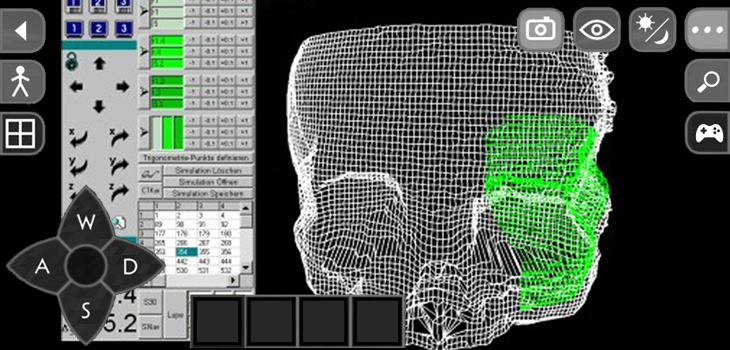
When surgeons and engineers get together, great things can happen. New work from the Johns Hopkins University School of Medicine is pointing the way for major progress in spine surgery. Jeffrey Siewerdsen, Ph.D. is a professor of biomedical engineering at Johns Hopkins. He tells OTW, “Our group is developing imaging for the OR that will improve surgical precision and patient safety. Using simple systems like a mobile C-arm, we can form high-quality 3D images, achieve surgical guidance without conventional tracking systems, and provide decision support for accurate, streamlined target localization. In each case, we are striving for solutions that fit with natural surgical workflow and are suitable for broad utilization— simple on the surface, with sophisticated high-speed computing methods for 3D imaging and registration under the hood.”
An example of their work is the LevelCheck algorithm, which won the 2013 Spine Technology Award and is undergoing clinical studies at Johns Hopkins. Dr. Siewerdsen told OTW, “This technology aims to eliminate wrong-level surgery by automatically labeling vertebrae in intraoperative radiographs. As a means of decision support, LevelCheck provides an independent check on vertebral localization that should improve workflow and reduce human error compared to conventional manual level counting. The system automatically registers a patient’s preoperative CT to any radiograph acquired in the OR and superimposes the radiograph with clearly visible labels on the target vertebrae. The registration involves tens of thousands of calculations performed in just a few seconds thanks to high-speed graphics processing units (GPUs) that are common to modern video games.”
The LevelCheck system was evaluated in preclinical studies by Dr. Jay Khanna from the Department of Orthopaedic Surgery at Johns Hopkins University, showing it to be robust against changes in patient setup between the preoperative CT and the OR table and also robust against the presence of surgical tools in the radiograph. The system is now undergoing clinical studies at Johns Hopkins under the direction of Dr. Ziya Gokaslan from the Department of Neurosurgery. “We are finding LevelCheck to give an accurate independent check in localizing the target vertebrae, ” Dr. Gokaslan told OTW. “Our studies so far show it to be fast and reliable, providing useful decision support within our natural workflow in way that could reduce time and stress.”
The Johns Hopkins team of surgeons and engineers is now taking such technology further. Studies underway include a means for surgical navigation without conventional trackers and markers attached to the patient. “The C-arm is the tracker, and the patient is the marker, ” says Dr. Siewerdsen. “Using a high-speed registration method similar to LevelCheck, we can provide 3D navigation for the surgeon with precision better than conventional trackers, without markers attached to tools or the patient, and reducing radiation dose compared to conventional fluoroscopy.”
The team is demonstrating the potential for systems like a mobile C-arm to bring high-end functionality to mainstream procedures. “We want to build simple, streamlined systems that answer major challenges in mainstream surgery, rather than increasingly sophisticated systems with limited impact, ” says Dr. Siewerdsen. “The ability to form high-quality 3D images on a mobile C-arm offers the ability to measure the quality of surgical product and detect problems that might otherwise be detected hours later in post-operative CT. And the ability to accurately register preoperative images and planning data into intraoperative radiographs gives a means of quality assurance that should help surgeons operate more effectively and safely without disrupting workflow.”
Many of these advances leverage high-speed computing methods from the video game industry. “With such a large base of consumer technology getting faster and cheaper year after year, ” says Dr. Siewerdsen, “we can expect these kinds of imaging solutions to benefit strongly, making them faster, more reliable, and suitable to a broad spectrum of surgery.”
PT Doesn’t Improve Pain, Function in Hip OA
A study from The University of Melbourne has found that among adults with painful hip osteoarthritis (OA), physical therapy does not produce greater improvements in pain or function compared with a placebo treatment. The study was led by Professor Kim Bennell.
In an article published in the Journal of the American Medical Association, Professor Bennell and her colleagues randomly assigned patients with hip osteoarthritis to attend 10 sessions of either active PT (which included education and advice, manual therapy, home exercise and walking with an aid, if needed) or placebo treatments (which included inactive ultrasound and gel). Post treatment, the PT group continued unsupervised home exercise while the placebo group self-applied gel three times a week. The team found that patient outcomes were roughly the same the 13 and 36 week intervals.
Dr. Bennell told OTW, “We had expected that ‘real’ physical therapy would have greater benefits for pain and function than placebo physical therapy—in actual fact, while both treatments did improve pain and function, there was no difference in these benefits between the two groups. I think this highlights the very powerful ‘placebo’ effects of seeing a caring therapist who listens, shows empathy and lays hands on the affected part together with the patient’s beliefs and positive expectations around the treatment.”
She added, “We have a number of other trials for people with hip osteoarthritis and others for people with knee osteoarthritis. We are testing a range of different interventions including knee unloading shoes, pain coping skills training and use of a walking stick as well as other studies looking at what factors trigger increases in pain to help us design better treatments.”
HSS Designated FIFA Medical Centre of Excellence
The Fédération Internationale de Football Association (FIFA) has designated Hospital for Special Surgery (HSS) in New York City, as a FIFA Medical Centre of Excellence (FMCoE). HSS is one of only three hospitals in the United States to receive this distinction.
“As the former medical director of Schulthess Clinic in Zurich (the first FIFA Medical Center of Excellence) I am very familiar with HSS’s sports medicine, rehabilitation and performance care for professional and elite athletes because both institutions are members of the International Society of Orthopedic Centres, ” said Professor Jiri Dvorak, FIFA’s chief medical officer, in the May 19, 2014 news release.
“This recognition is an extraordinary privilege and complements HSS’s longstanding connection to world-class athletes through a broad range of sports, including soccer, as the official hospital of the New York Red Bulls, ” said Louis A. Shapiro, president and CEO, Hospital for Special Surgery. “While our sports medicine service is dedicated to the care of professional athletes, clinicians throughout HSS are committed to getting them back safely to their highest level of play.”
Riley J. Williams, III, M.D. is an orthopedic surgeon and member of the Sports Medicine and Shoulder Service at HSS. He has served as the medical director for the New York Red Bulls since 2006. Dr. Williams told OTW, “Taking care of elite athletes takes a great deal of focus. One doctor doesn’t do it all. At Hospital for Special Surgery, we have a multi-disciplinary team consisting of the head team physician, additional sports medicine specialists, physical therapists, athletic trainers, nutritionists, and strength and conditioning coaches. It’s a rewarding endeavor, and we enjoy what we do.”
Julie Zielinski, M.D. Receives “One With Courage Award”
Per a May 24 article in The Chattanoogan (.com), “Julie Zielinski, M.D., pediatric orthopedic surgeon at Children’s Hospital at Erlanger, Chattanooga, Tennessee, has received the “One with Courage Award” for Healing from the Children’s Advocacy Center of Hamilton County. Dr. Zielinski received the award during the inaugural One with Courage Awards Luncheon on Thursday, April 3, at the Downtown Marriott. The One with Courage Awards Luncheon celebrates champions of children in the area who enrich the lives of kids through Help, Hope or Healing and honors those who support the children served by the CACHC through giving, service, or voluntarism. The Healing award goes to champions who have the courage to make hurting children whole by providing healing to their mind, body or spirit.”
Dr. Zielinski received a medical degree from Wayne State University Medical School in Detroit, Michigan. She completed an orthopedic surgery residency program from McLaren Regional Medical Center in Flint, Michigan and fellowship training in pediatric orthopedic surgery at Arnold Palmer Hospital for Children in Orlando, Florida.
React:
Discussion
This is a fascinating development. In my practice we've seen similar outcomes with the revised protocol. The key differentiator seems to be patient selection criteria. Has anyone else noticed the correlation with BMI thresholds?
Great point. I'd push back slightly on the conclusion, the sample size in the cited study is too small to draw population-level inferences. That said, the directional signal is compelling and worth a larger RCT.
We implemented a similar approach last year. Early results are promising but we're still gathering 12-month follow-up data. Happy to share our protocol if anyone is interested.
Join the conversation
Orthopedic professionals are discussing this. Sign in and upgrade to read every comment and add your voice.