
Having too much uric acid in the blood is not a good situation—especially for men. A study by Tapan Mehta, M.D., of the University of Colorado at Denver, found that men 65 and older with higher than normal uric acid levels were 62% more likely to fracture a hip. He was not able to find a similar relationship between uric acid levels and hip fractures in women, suggesting that other factors may be more significant.
Uric Acid Bad for Male Bones
1 min read Premium comments
Secondary
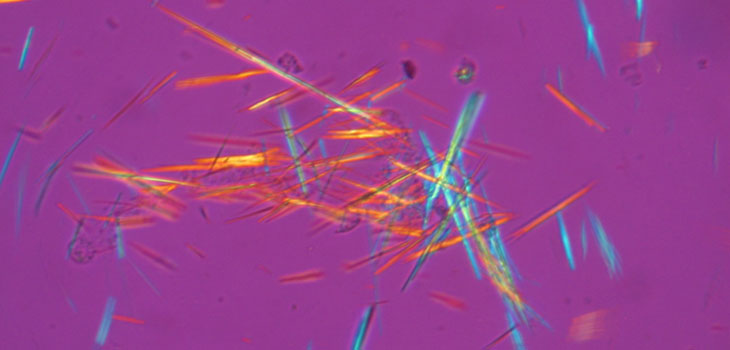
Uric acid is a normal byproduct of the breakdown of cells within the body. “People with unhealthy dietary habits are more likely to have high uric acid levels, ” Mehta said. “And people with kidney disease are also likely to have high uric acid levels.”
To investigate how uric acid levels might relate to bone health Mehta and his team looked at data from the Cardiovascular Health Study on 4, 692 men and women who had their uric acid levels recorded. Among the 1, 963 men in the study, 430 had uric acid levels above 7mg. Normal is 3.5 – 7.2. During the 11 year length of the study 156 hip fractures took place.
“There are several possible mechanisms that might be involved, ” Mehta said. “High uric acid levels may impair nitric oxide availability in the bone and this may increase bone fragility and fracture risk. Uric acid may also induce inflammation in the bone, and this could lead to more fragile bone. In addition, uric acid suppresses vitamin D activation and this could play a role in the higher risk of fractures.”
Author
React:
Discussion
This is a fascinating development. In my practice we've seen similar outcomes with the revised protocol. The key differentiator seems to be patient selection criteria. Has anyone else noticed the correlation with BMI thresholds?
Great point. I'd push back slightly on the conclusion, the sample size in the cited study is too small to draw population-level inferences. That said, the directional signal is compelling and worth a larger RCT.
We implemented a similar approach last year. Early results are promising but we're still gathering 12-month follow-up data. Happy to share our protocol if anyone is interested.
Join the conversation
Orthopedic professionals are discussing this. Sign in and upgrade to read every comment and add your voice.