
TissueGen, Inc. has announced that it has been issued a patent from U.S. Patent and Trademark Office for a self-expanding medical device capable of drug elusion within the body. TissueGen’s patented product meets the market’s need for devices that are self-expanding and can stay in place when implanted in tubular organs of the human body.
TissueGen: Patent for Self-Expanding Device for Drug Elusion
1 min read Premium comments
Secondary
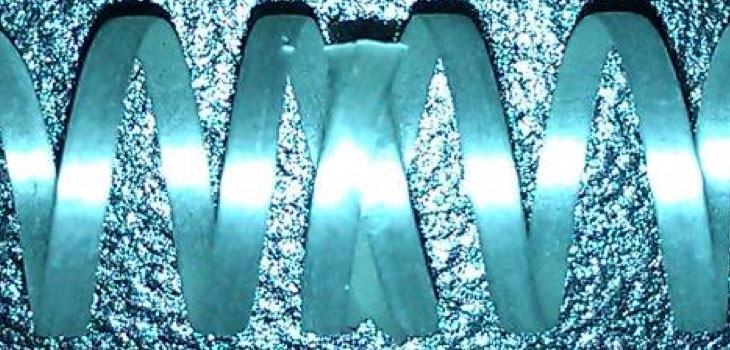
TissueGen’s latest patent applies to the invention of a helical coil comprising multiple reversing sense helical coil units that are capable of drug elution and provide all the benefits of a small closed-cell stent design while maintaining high flexibility, high radial force and crush resistance. The resulting device is well-suited for the peripheral vascular system, but can really benefit most applications where a device is required to maintain position within any tubular anatomical structure.
Definitive testing supports the strength of TissueGen’s helical coil-containing device compared to other stents, even bare metal stents. This self-expanding device corrects the issues of previous generations of coil-based stents, which have typically had limited clinical success.
“Helical coil stents have long been a good idea in theory but were prone to migrating in the artery and causing complications; in some scenarios the end-user patient could even end up with a narrower artery than they started with, ” said Kevin Nelson, Ph.D., company CSO, in the April 29, 2014 news release. “TissueGen’s device has a unique design which allows it to be self-anchoring and prevents tissue prolapse. Another improvement over existing products is that ours reduces the time and effort required by the surgeon to implant the device.”
Dr. Nelson told OTW, “TissueGen is focused upon licensing this patented design to medical device companies to add value to existing products and enable new innovations that may improve patients’ lives.”
React:
Discussion
This is a fascinating development. In my practice we've seen similar outcomes with the revised protocol. The key differentiator seems to be patient selection criteria. Has anyone else noticed the correlation with BMI thresholds?
Great point. I'd push back slightly on the conclusion, the sample size in the cited study is too small to draw population-level inferences. That said, the directional signal is compelling and worth a larger RCT.
We implemented a similar approach last year. Early results are promising but we're still gathering 12-month follow-up data. Happy to share our protocol if anyone is interested.
Join the conversation
Orthopedic professionals are discussing this. Sign in and upgrade to read every comment and add your voice.