
It’s a first! Using monkeys, researchers have shown that it is possible to make new bone from stem-cell-like induced pluripotent stem cells (iPSCs) made from an individual animal’s own skin cells. The study also shows that there is some risk that those iPSCs could seed tumors, but that unfortunate outcome appears to be less likely than studies in immune-compromised mice would suggest.
Success in Monkeys: Pluripotent Stem Cells
2 min read Premium comments
Secondary
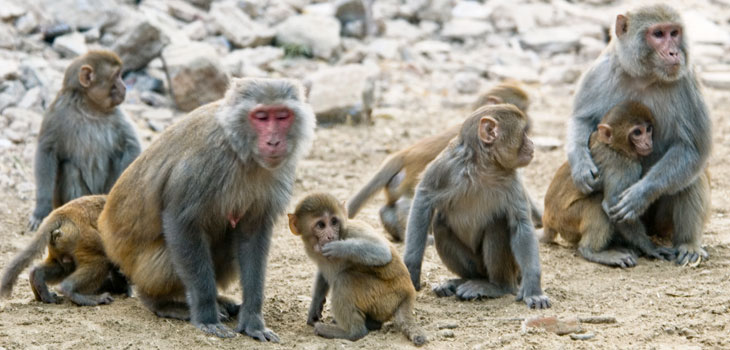
“We have been able to design an animal model for testing of pluripotent stem cell therapies using the rhesus macaque, a small monkey that is readily available and has been validated as being closely related physiologically to humans, ” said Cynthia Dunbar of the National Heart, Lung, and Blood Institute in the May 14, 2014 news release. “We have used this model to demonstrate that tumor formation of a type called a ‘teratoma’ from undifferentiated autologous iPSCs does occur; however, tumor formation is very slow and requires large numbers of iPSCs given under very hospitable conditions. We have also shown that new bone can be produced from autologous iPSCs, as a model for their possible clinical application.”
The researchers first used a standard recipe to reprogram skin cells taken from rhesus macaques. They then coaxed those cells to form first pluripotent stem cells and then cells that have the potential to act more specifically as bone progenitors. Those progenitor cells were then seeded onto ceramic scaffolds that are already in use by reconstructive surgeons attempting to fill in or rebuild bone. And, it worked; the monkeys grew new bone.
The researchers report that no teratoma structures developed in monkeys that had received the bone “stem cells.” In other experiments, undifferentiated iPSCs did form teratomas in a dose-dependent manner.
The researchers say that therapies based on this approach could be particularly beneficial for people with large congenital bone defects or other traumatic injuries. The team indicates that although bone replacement is an unlikely “first in human” use for stem cell therapies given that the condition it treats is not life threatening, the findings in a primate are an essential step on the path toward regenerative clinical medicine.
“A large animal preclinical model for the development of pluripotent or other high-risk/high-reward generative cell therapies is absolutely required to address issues of tissue integration or homing, risk of tumor formation, and immunogenicity, ” Dunbar said. “The testing of human-derived cells in vitro or in profoundly immunodeficient mice simply cannot model these crucial preclinical safety and efficiency issues.”
Author
React:
Discussion
This is a fascinating development. In my practice we've seen similar outcomes with the revised protocol. The key differentiator seems to be patient selection criteria. Has anyone else noticed the correlation with BMI thresholds?
Great point. I'd push back slightly on the conclusion, the sample size in the cited study is too small to draw population-level inferences. That said, the directional signal is compelling and worth a larger RCT.
We implemented a similar approach last year. Early results are promising but we're still gathering 12-month follow-up data. Happy to share our protocol if anyone is interested.
Join the conversation
Orthopedic professionals are discussing this. Sign in and upgrade to read every comment and add your voice.