
Kinamed Inc.’s SuperCable Iso-Elastic Polymer Cerclage System has been cleared in Japan by the Ministry of Health, Labour and Welfare.
Kinamed’s Polymer SuperCable Cleared in Japan
2 min read Premium comments
Secondary
According to a May 12, 2014 company press release, the cable system is the only iso-elastic, polymer cerclage system in the market anywhere in the world. It is used in a wide range of orthopedic reconstructive and trauma applications. It has been in clinical use in the U.S. for ten years.
Addresses “Fretting Wear”
The key word here is “polymer” because fretting from ancillary fixation devices, such as braided metal cerclage cables, can generate a substantial volume of metallic debris that contributes to local and systemic particulate burden.
Traditional metal cerclage cables are made up of many tiny braided metal wire filaments that, by the very nature of their construction, result in a large number of metal-on-metal wear interfaces. Wear between nonbearing surfaces can occur at modular connections, at interfaces between the prosthesis and cement or bone, and with ancillary devices employed to reattach the trochanter or to stabilize periprosthetic fractures or bone grafts. There have been reports of loose and broken stainless steel hardware in patients due to this “fretting wear.”
In a 2004 study by Urban, et al. in the Journal of Arthroplasty, metallic particles generated between nonbearing surfaces were present in the liver and/or spleen of 73% of patients with a prior failure and revision of their hip arthroplasty.
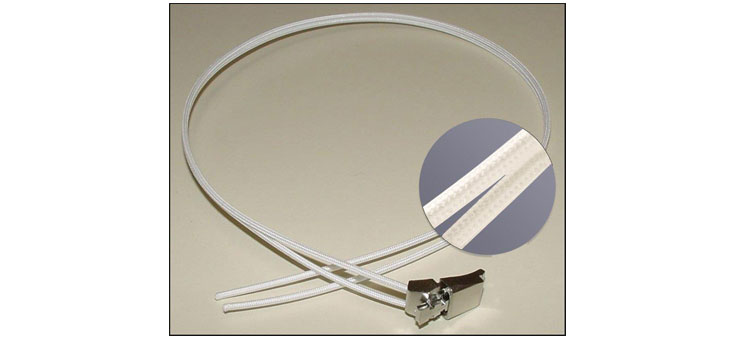
According to the company, the polymer cable system offers an alternative cerclage cable that eliminates cerclage fixation as a source of metal debris burden. Constructed from high-strength polyethylene fibers and nylon, and fixed with a titanium clasp, immunogenic metals such as chromium and cobalt are avoided. The pliable polymer fibers offer extraordinary fatigue strength and resistance to abrasion. The “Iso-Elastic” nature of the SuperCable is designed to allow it to move with the bone during cyclic loading in order to help prevent “digging in” and to remain tight during the bone healing phase.
Commercialization
The company will begin commercializing the system through its longtime Japanese distribution partner, Yufu Itonaga Co., Ltd. of Tokyo. Yufu also represents two other Kinamed product lines in Japan: the CarboJet CO2 Lavage System used for cleaning and drying the bone bed in cemented arthroplasty procedures and the NeuroPro Cranial Fixation System used by neurosurgeons for cranial closure. The company’s portfolio also includes associated cable-plates and trochanteric grips for the cerclage cables; the KineMatch Patello-Femoral Replacement, a CT based custom arthroplasty technology; the NaviPro Surgical Navigation System, and the NeuroPro Cranial Plating System.
Author
React:
Discussion
This is a fascinating development. In my practice we've seen similar outcomes with the revised protocol. The key differentiator seems to be patient selection criteria. Has anyone else noticed the correlation with BMI thresholds?
Great point. I'd push back slightly on the conclusion, the sample size in the cited study is too small to draw population-level inferences. That said, the directional signal is compelling and worth a larger RCT.
We implemented a similar approach last year. Early results are promising but we're still gathering 12-month follow-up data. Happy to share our protocol if anyone is interested.
Join the conversation
Orthopedic professionals are discussing this. Sign in and upgrade to read every comment and add your voice.