
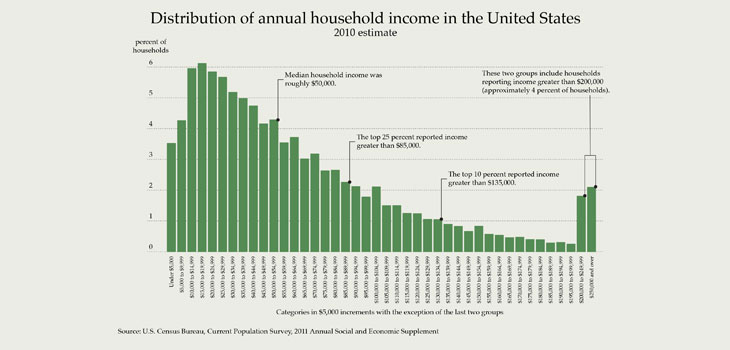
What should individuals of a certain age do if money is in short supply—save for retirement or a joint replacement? That is the question raised by NerdWallet writer Nepala Pratini who points out that the cost of a knee or hip replacement is far above the median annual household income in 18 states. Most of these states are in the southern half of the United States.
Joint Replacement Cost Higher Than Annual Income
1 min read Premium comments
Secondary
According to the Organization for Economic Cooperation and Development, the number of hip and knee replacements jumped by more than 25% between 2000 and 2009. At a growth rate of 8%, one in 12 adults over the age of 25 will, at some point, have this surgery.
Pratini reports that the average price across the country for a joint replacement is $50, 105. Monterey Park Hospital in California charges the most ($223, 373) while the Chickasaw National Medical Center in Oklahoma charges $5, 303. As Pratini notes, both prices are unmanageable for millions of individuals who may need joint replacements in the coming years.
According to a survey conducted by the Employee Benefit Research Institute and Greenwald and Associatesabout a third of U.S. workers have less than $1, 000 saved for retirement. About 60% have saved less than $25, 000. Researchers for NerdWallet estimate that, even with insurance, ten million Americans will face medical bills they will be unable to pay. Insurance does not make costly procedures free.
Fidelity estimates couples who retired in 2013 will need $220, 000 to cover medical expenses through the end of life. A hip or knee replacement for the uninsured could account for one-quarter of these costs.
Author
React:
Discussion
This is a fascinating development. In my practice we've seen similar outcomes with the revised protocol. The key differentiator seems to be patient selection criteria. Has anyone else noticed the correlation with BMI thresholds?
Great point. I'd push back slightly on the conclusion, the sample size in the cited study is too small to draw population-level inferences. That said, the directional signal is compelling and worth a larger RCT.
We implemented a similar approach last year. Early results are promising but we're still gathering 12-month follow-up data. Happy to share our protocol if anyone is interested.
Join the conversation
Orthopedic professionals are discussing this. Sign in and upgrade to read every comment and add your voice.