
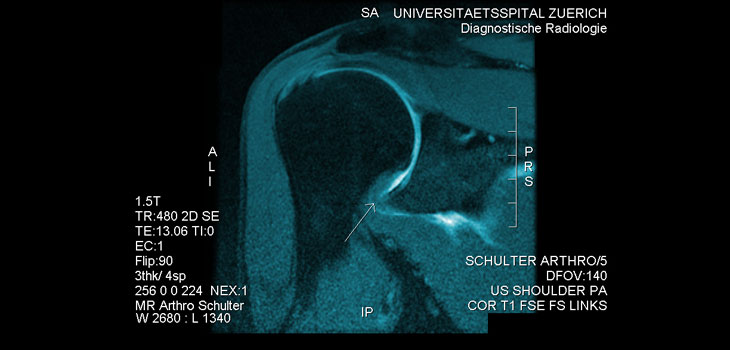
Twenty-five centers across the U.S. and ten in Australia are participating in a study of a drug designed to treat adhesive capsulitis—a condition better known as “frozen shoulder.” Frozen shoulder affects from 3 to 5% of the adult population, is very painful, and limits shoulder motion for a long period of time, ranging from months to years. More women than men are affected by it.
Frozen Shoulder Treatment Study Launched
1 min read Premium comments
Secondary
The research study involves injections of an enzyme called collagenase (CCH) that Marie A. Badalamente, Ph.D., Professor in the Department of Orthopaedics, and Edward Wang, M.D., associate professor of orthopaedics, Division of Shoulder, Elbow and Hand Surgery at the State University of New York at Stony Brook developed. The two were the first to develop the collagenase injection method of treating frozen shoulder and to patent the technology. The current clinical trial offered at Stony Brook University is designed to continue testing the use of the drug.
“Currently, treatment options for patients with frozen shoulder include cortisone injections, with or without extended physical therapy, which can be painful, physical therapy alone, or surgery, ” said Wang. “We believe this investigational drug may reduce the pain caused by frozen shoulder and help to restore shoulder motion in a matter of months, instead of years.”
“We have seen promising results from the earlier clinical trials of collagenase to treat frozen shoulder both from an efficacy and safety standpoint, ” said Badalamente. “We encourage those in our region afflicted with this painful condition to participate in ongoing trials at Stony Brook.”
According to the release, more participants are needed. Eligibility criteria for the clinical trial include being age 18 or older, having frozen shoulder of only one shoulder with a duration of at least three months but no more than a year, and having no rotator cuff tears, arthritis or other shoulder problems. Interested individuals meeting these criteria may call 631-444-2215 about the details of the ongoing trial in the Department of Orthopaedics at Stony Brook. The clinical trial for frozen shoulder lasts for three months for each participant. Compensation for volunteers is up to $275.
Author
React:
Discussion
This is a fascinating development. In my practice we've seen similar outcomes with the revised protocol. The key differentiator seems to be patient selection criteria. Has anyone else noticed the correlation with BMI thresholds?
Great point. I'd push back slightly on the conclusion, the sample size in the cited study is too small to draw population-level inferences. That said, the directional signal is compelling and worth a larger RCT.
We implemented a similar approach last year. Early results are promising but we're still gathering 12-month follow-up data. Happy to share our protocol if anyone is interested.
Join the conversation
Orthopedic professionals are discussing this. Sign in and upgrade to read every comment and add your voice.