
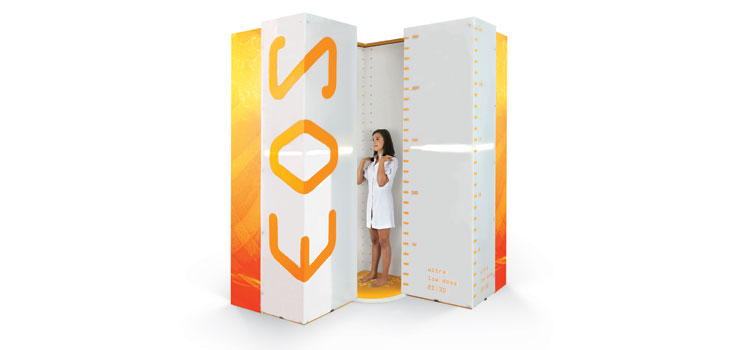
EOS imaging has announced the installation of the EOS imaging system in Japan’s leading spine medical center at Meijo Hospital in Nagoya. The installation is one of the four installations of EOS in Japan since the equipment has received market clearance.
EOS imaging: New Installation in Japan
1 min read Premium comments
Secondary
Japanese adoption of the EOS system began in December 2013 with a first installation at Niigata Spine Surgery Center (NSSC) following regulatory approval by the Japanese authorities. The current installation at the Meijo Hospital, affiliated to the Nagoya University Hospital, underscores the adoption of EOS by the best Japanese institutions for spine surgery. Meijo Hospital has the highest volume of deformative spine surgeries in Japan.
Professor Noriaki Kawakami, director of orthopedic surgery at Meijo Hospital, said in the April 22, 2014 news release, “Our hospital performs a vital role providing community health services throughout Japan. The installation of EOS in our facilities and throughout Japan is an important step in ensuring that our patients have access to the most beneficial imaging technology available.”
Marie Meynadier, CEO of EOS imaging, said, “We are happy to report rapid adoption of the EOS system in Japan. The Meijo hospital and more globally our four installations demonstrate the positive results from our ongoing market development strategy in the Asia-Pacific region. We are confident that EOS adoption will continue in Japan, and throughout the region, as other physicians see the value of our technology demonstrated at these hospitals.”
Meynadier told OTW, “As we develop our sales organization and begin to deploy our technology in the Asia-Pacific region, we are simultaneously intensifying our marketing, clinical and applicative support initiatives in countries where EOS is approved. EOS will be present for several major Asian orthopedic meetings in 2014, and we also have EOS symposia planned in China, Korea and Japan. These symposia will allow U.S. and European EOS users to share their positive experiences with our technology with new and potential Asian customers.”
Author
React:
Discussion
This is a fascinating development. In my practice we've seen similar outcomes with the revised protocol. The key differentiator seems to be patient selection criteria. Has anyone else noticed the correlation with BMI thresholds?
Great point. I'd push back slightly on the conclusion, the sample size in the cited study is too small to draw population-level inferences. That said, the directional signal is compelling and worth a larger RCT.
We implemented a similar approach last year. Early results are promising but we're still gathering 12-month follow-up data. Happy to share our protocol if anyone is interested.
Join the conversation
Orthopedic professionals are discussing this. Sign in and upgrade to read every comment and add your voice.