
Pluristem Therapeutics, Inc. has announced that Dr. Scott Rodeo of Hospital for Special Surgery has (HSS) presented his research findings in a scientific poster titled, “Use of Human Placental-Derived Adherent Stromal Cells Improves Tendon Healing in a Preclinical Model of Tendon Injury.”
Pluristem: Human Placental-Derived Stromal Cells Appear Promising
2 min read Premium comments
Secondary
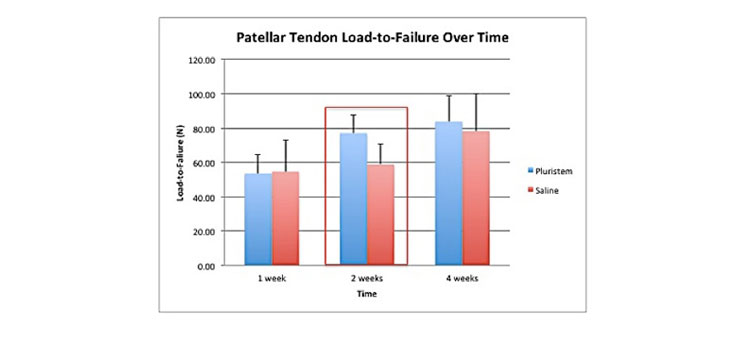
Dr. Rodeo’s work has concluded that: a) placental-expanded cell therapy appeared to have an early beneficial effect on tendon healing following collagenase injury in this preclinical model; b) since these cells are immunoprivileged and are expanded ex vivo, its potential for “off-the-shelf” use is attractive relative to existing cell-based therapies; and c) additional preclinical studies are necessary to understand how these cells may affect tendon repair.
“Although our findings should be considered preliminary, adherent stromal cells derived from human placenta appear promising as a readily available cell source to aid tendon healing and regeneration, ” stated Dr. Rodeo in the March 12, 2014 news release. “These detailed preclinical results, as well as the favorable top-line results we announced from our Phase I/II muscle injury study in January, both validate our strategy to pursue advanced clinical studies of our PLX cells for the sports and orthopedic market, ” stated Pluristem CEO Zami Aberman.
Dr. Rodeo and his orthopedic research team at HSS studied the effects of Pluristem’s PLacental eXpanded (PLX)-PAD cells in a preclinical model of patellar tendons that had sustained collagenase-induced injuries.
Dr. Rodeo told OTW, “I was surprised to learn that these cells would have an effect in our tendonosis model, as healing occurs spontaneously in small rodent models, making it difficult to improve on natural healing processes. Future work will need to optimize the dose and timing of cell application. Another avenue for future work will be to evaluate the effect of these cells in other application such as healing of a surgical tendon repairs.
Asked what he was surprised to learn, Zami Aberman told OTW, “It was interesting to see that PLX-PAD cells have early beneficial effect on tendon healing, suggesting a better recovery from tendon injury. PLX-PAD is a real ‘off the shelf’ product (human cells injected to rats).”
Asked about future related work, Aberman commented, “We combined the pre-clinical data generated by Dr. Rodeo with our Phase 1/2 muscle injury study to define the best indication for our next clinical trial in the ‘soft tissue’ arena. Following the results of the analysis we will move into phase 2 clinical study.”
“My vision for Pluristem in 2015 is that the results from additional clinical studies will suggest that placenta derived cells are the superior cells for allogeneic cell therapy. We anticipate new clinical studies in new indication and additional out-license deals.”
Author
React:
Discussion
This is a fascinating development. In my practice we've seen similar outcomes with the revised protocol. The key differentiator seems to be patient selection criteria. Has anyone else noticed the correlation with BMI thresholds?
Great point. I'd push back slightly on the conclusion, the sample size in the cited study is too small to draw population-level inferences. That said, the directional signal is compelling and worth a larger RCT.
We implemented a similar approach last year. Early results are promising but we're still gathering 12-month follow-up data. Happy to share our protocol if anyone is interested.
Join the conversation
Orthopedic professionals are discussing this. Sign in and upgrade to read every comment and add your voice.