
DePuy Synthes Power Tools has a new electric drill for spine procedures.
New 80, 000 RPM Power Tool From DePuy Synthes
1 min read Premium comments
Secondary
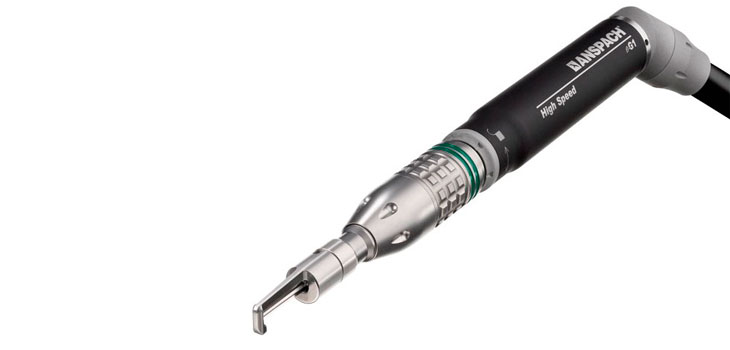
The Anspach EG1 High Speed Electric System has multiple attachments and accessories and, in addition to spine, is designed for neurosurgery and otology procedures. The system was launched at the 2014 American Association of Neurological Surgeons meeting in San Francisco in early April.
The system includes a high-speed drill with 30% more power than the Anspach XMAX and EMAX 2 Plus systems. The device is used to cut and shape bone, including the spine and cranium, and has a wide range of quick-coupling attachments, dissection tools and accessories for greater flexibility across procedures.
Ed Mackey, worldwide president, DePuy Synthes Power Tools said the company developed the system to “provide power, precision, operational efficiency and ease of use across a variety of applications that require cutting and shaping bone. Our goal is to provide surgeons with tools that perform with precision so that they can achieve the best possible patient outcomes.”
The system features integrated air-cooling, an operating speed of up to 80, 000 rpm, minimal start-up kick, and is compatible with automated washing and sterilization.
Synthes Inc. acquired the Anspach Effort, Inc., for an undisclosed purchase price in 2010. Michel Orsinger, then the CEO of Synthes, said the acquisition would allow the company to establish a dedicated power tools division, with close to $200 million in total sales.
Author
React:
Discussion
This is a fascinating development. In my practice we've seen similar outcomes with the revised protocol. The key differentiator seems to be patient selection criteria. Has anyone else noticed the correlation with BMI thresholds?
Great point. I'd push back slightly on the conclusion, the sample size in the cited study is too small to draw population-level inferences. That said, the directional signal is compelling and worth a larger RCT.
We implemented a similar approach last year. Early results are promising but we're still gathering 12-month follow-up data. Happy to share our protocol if anyone is interested.
Join the conversation
Orthopedic professionals are discussing this. Sign in and upgrade to read every comment and add your voice.