
A new version of Exogen, an ultrasound bone healing system made by Bioventus, LLC, is now available in Canada. A medical device that its makers claim helps fractured bones heal is now offered with new compliance features and what Bioventus calls a “healing progression Performance Guarantee.” The company says that the device, which replaces the Exogen 4000+ model, is indicated for the non-invasive treatment of established non-unions, except for those on the skull and vertebra.
Exogen Bone Healing: Performance Guaranteed!
1 min read Premium comments
Secondary
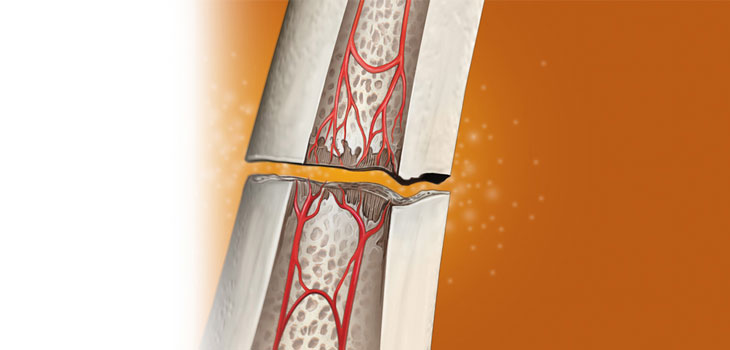
Bioventus reports that the new Exogen is a portable lightweight device that features an ultrasound probe that patients place on their skin at the site of their bone break for 20 minutes a day. Patients can easily perform the treatment at home. The device uses low-intensity pulsed ultrasound to help stimulate the body’s natural healing process. The company claims an 86% heal rate for fractures not healing on their own and a 38% faster healing of new fractures.
The new Exogen Performance Guarantee refunds out-of-pocket costs to Exogen patients who meet program requirements and who fail to experience healing progression in their non-union fractures. Fractures of the skull and spine are not included in this guarantee.
Paul Zalzal, M.D., Assistant Clinical Professor at the McMaster University Ontario, Canada; and Former Chief of Orthopaedic Surgery at Oakville Trafalgar Memorial Hospital, said, “The release of the new Exogen device is exciting news for those of us who treat fractures on a regular basis. This technology has become a very useful tool for fracture treatment. The new Performance Guarantee is unprecedented and provides reassurance that Bioventus stands behind its product.”
Bioventus CEO Anthony Bihl says that, “The innovative Exogen device is an example of the Bioventus commitment to create bone healing therapies that work to enhance the body’s natural healing process, thereby accelerating recovery and improving the patient’s quality of life.”
Author
React:
Discussion
This is a fascinating development. In my practice we've seen similar outcomes with the revised protocol. The key differentiator seems to be patient selection criteria. Has anyone else noticed the correlation with BMI thresholds?
Great point. I'd push back slightly on the conclusion, the sample size in the cited study is too small to draw population-level inferences. That said, the directional signal is compelling and worth a larger RCT.
We implemented a similar approach last year. Early results are promising but we're still gathering 12-month follow-up data. Happy to share our protocol if anyone is interested.
Join the conversation
Orthopedic professionals are discussing this. Sign in and upgrade to read every comment and add your voice.