
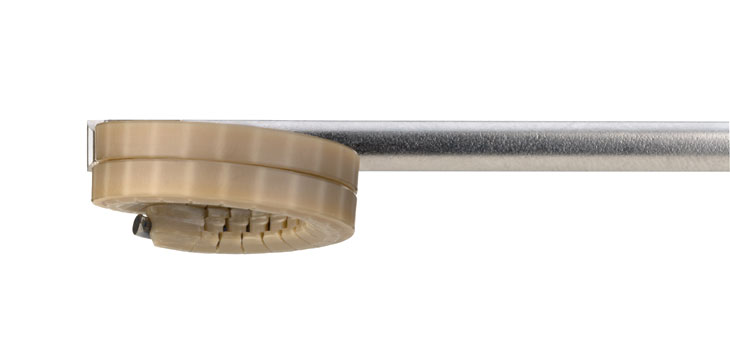
Benvenue Medical has announced the full commercial launch of the Kiva VCF Treatment System for the reduction and treatment of spine fractures. Recently released results from KAST (Kiva System as a Vertebral Augmentation Treatment – A Safety and Effectiveness Trial) demonstrated the Kiva System met or exceeded the performance of the Medtronic balloon kyphoplasty (BKP) system. The Kiva System is an implant-based solution for vertebral augmentation and a next-generation alternative to BKP, making it the first clinically proven new approach to the treatment of VCFs in over a decade.
Benvenue Medical: Full Launch of Kiva VCF
2 min read Premium comments
Secondary
The Kiva System features a proprietary, cylindrical implant made from a medical polymer that is designed to provide a very predictable structural support for the vertebral body and a reservoir to contain and direct the flow of bone cement. This new implant approach allows the treating doctor to deliver a much more consistent result. BKP inserts a bolus of bone cement directly into a vertebral cavity without an implant to hold it, making the control of the bone cement less predictable. The company continues to expand its direct sales distribution, network of physicians using Kiva and hospital contracting agreements in response to initial demand.
Robert Weigle, CEO of Benvenue Medical, Inc. told OTW, “Our booth at the Society for Interventional Radiology conference was surrounded by companies that have balloon kyphoplasty products. Literally there were six companies right around our booth all offering balloons, with no discernible difference between any of them. Then along comes Benvenue with our new implant technology and with clinical data showing distinct clinical benefits and outcomes. You can imagine the response. We had physicians coming to the booth saying our implant really makes sense and when can they learn this technique.”
Asked where he hopes to be in one year with this product, Weigle commented, “As we are in the full swing of launching Kiva commercially this month, it’s difficult to think about a year from now. What I can share is that the reception among physicians we’ve been talking to has been very positive and there is substantial interest in Kiva as a new, implant-based approach to vertebral augmentation.”
React:
Discussion
This is a fascinating development. In my practice we've seen similar outcomes with the revised protocol. The key differentiator seems to be patient selection criteria. Has anyone else noticed the correlation with BMI thresholds?
Great point. I'd push back slightly on the conclusion, the sample size in the cited study is too small to draw population-level inferences. That said, the directional signal is compelling and worth a larger RCT.
We implemented a similar approach last year. Early results are promising but we're still gathering 12-month follow-up data. Happy to share our protocol if anyone is interested.
Join the conversation
Orthopedic professionals are discussing this. Sign in and upgrade to read every comment and add your voice.