
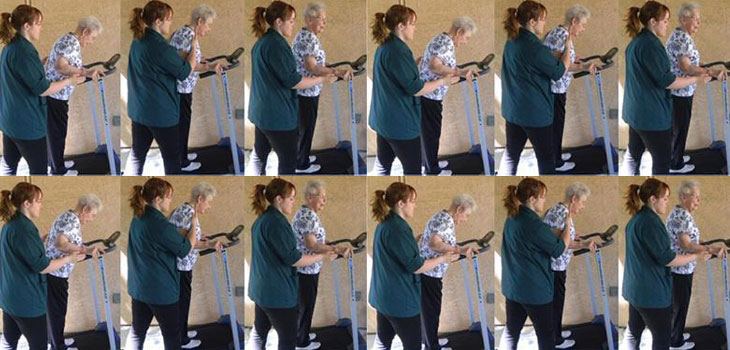
Advanced rehab after knee replacement surgery provides long-term benefits to those who receive it, according to a study conducted by Kenneth Ottenbacher, Ph.D., OTR, director of the Center for Rehabilitation Sciences at the University of Texas Medical Branch in Galveston, Texas.
12, 000 Patient Rehab Study Results Announced
1 min read Premium comments
Secondary
The research team examined data from 12, 199 men and women who had knee and hip replacements between 2008 and 2010. All of the research subjects were living independently prior to the surgery and underwent rehab as inpatients. Most of the participants were female. Their average age was 71.
The investigators looked at the patient’s ability to function when they were admitted for surgery, when they were discharged and three to six months after they left the rehab facility. The measurement included how well individuals could bathe, eat, climb stairs and the condition of their memory. Researchers scored the results on a scale of 1 to 7. The higher numbers indicated higher functioning. The results showed that when participants went into surgery their ability to move around scored an average of 1.6. This improved to 4.2 after their discharge from the hospital and rose to 5.6 in the months following rehab.
“If you can get patients to a certain threshold level, they can do the rest of the rehabilitation on their own, ” Ottenbacher said. “In a sense, these patients become their own physical therapists.”
The study was published in the Archives of Gerontology and Geriatrics. It did not deal with the impact of rehab several years following surgery when patients may settle back into patterns established before their joint replacement. Findings presented at the American Academy of Orthopaedic Surgeons annual meeting predicted that first-time knee replacements will rise 673% by 2030 to 3.5 million. Hip replacements will increase 174% in the same time period.
Author
React:
Discussion
This is a fascinating development. In my practice we've seen similar outcomes with the revised protocol. The key differentiator seems to be patient selection criteria. Has anyone else noticed the correlation with BMI thresholds?
Great point. I'd push back slightly on the conclusion, the sample size in the cited study is too small to draw population-level inferences. That said, the directional signal is compelling and worth a larger RCT.
We implemented a similar approach last year. Early results are promising but we're still gathering 12-month follow-up data. Happy to share our protocol if anyone is interested.
Join the conversation
Orthopedic professionals are discussing this. Sign in and upgrade to read every comment and add your voice.