
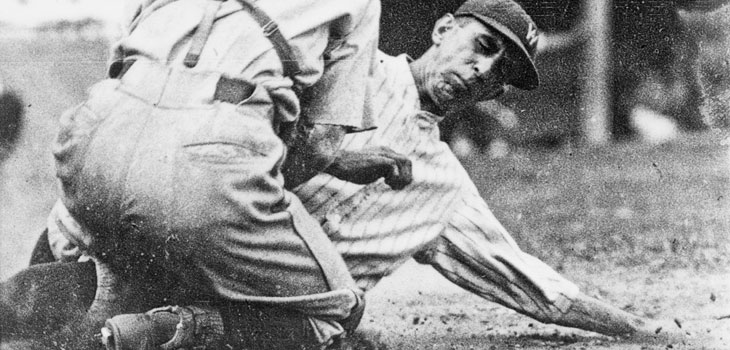
OTW recently reported on the hazards to the heads of runners trying to reach home plate in a baseball game and those of the catchers who try to block them. This week officials of Major League Baseball and the Major League Baseball Players Association have agreed on changing the rules. The change, while deemed “experimental, ” will take effect in the upcoming 2014 season. The rule reads, in part:
New Rules Protects Player’s Heads
1 min read Premium comments
Secondary
“A runner attempting to score may not deviate from his direct pathway to the plate in order to initiate contact with the catcher (or other player covering home plate). If, in the judgment of the umpire, a runner attempting to score initiates contact with the catcher (or other player covering home plate) in such a manner, the umpire shall declare the runner out, even if the player covering home plate loses possession of the ball.
“Unless the catcher is in possession of the ball, the catcher cannot block the pathway of a runner as he is attempting to score. If, in the judgment of the umpire, the catcher, without possession of the ball, blocks the pathway of the runner, the umpire shall call or signal the runner safe.”
Not every player is in agreement with the change. Ideastream , in its report on the rule change, quoted Pete Rose who is reported to have said, “What’s the game coming to? Evidently the guys making all these rules never played the game of baseball.” The new rule is intended to cut the risk of injury, particularly concussions, taking place as a result of collisions at home plate.
Author
React:
Discussion
This is a fascinating development. In my practice we've seen similar outcomes with the revised protocol. The key differentiator seems to be patient selection criteria. Has anyone else noticed the correlation with BMI thresholds?
Great point. I'd push back slightly on the conclusion, the sample size in the cited study is too small to draw population-level inferences. That said, the directional signal is compelling and worth a larger RCT.
We implemented a similar approach last year. Early results are promising but we're still gathering 12-month follow-up data. Happy to share our protocol if anyone is interested.
Join the conversation
Orthopedic professionals are discussing this. Sign in and upgrade to read every comment and add your voice.