
Two Baltimore surgeons have performed the first surgery in North America using the P2—the latest generation of Ellipse Technologies, Inc.’s Precice Limb Lengthening System. John Herzenberg, M.D., the director of the Rubin Institute’s International Center for Limb Lengthening (ICLL) and Shawn Standard, M.D., head of Pediatric Orthopedics at the ICLL, inserted the P2 rod into the tibia of a patient at Sinai Hospital earlier this year.
New Limb-Lengthening Surgery Performed
2 min read Premium comments
Secondary
According to a report by LifeBridge Health, the Precice Limb Lengthening System was the first externally controllable internal limb lengthening system to receive clearance by the FDA. The system was co-developed by Standard and Herzenberg in collaboration with Ellipse Technologies of Irvine, California, and Stuart Green, M.D., clinical professor of orthopedic surgery, University of California, Irvine. Launched in early 2012, the first generation of the Precice was the first fully controllable internal limb lengthening system available to medical professionals.
“The Precice Limb Lengthening System represented a revolutionary advancement in the field of limb lengthening, ” said Herzenberg. “This introduction of the P2 is the next step in this ongoing evolution. The Precice system has been a great success at the Rubin Institute. Since 2012, the ICLL has performed 100 surgeries using the initial Precice. We expect similar results with the new P2, along with expanded applicability to younger and smaller patients, because the P2 nail is available in a smaller size (8.5 mm diameter) compared to the original Precice nail.”
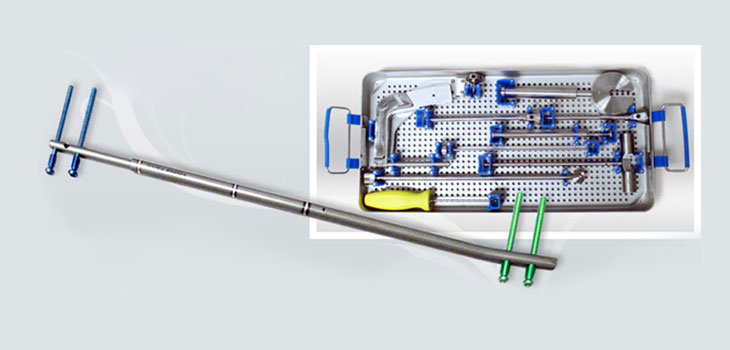
The Precice Limb Lengthening System uses a telescopic titanium rod surgically implanted in either the femur or tibia in conjunction with an external remote controller to internally lengthen bones in the leg. Inside the rod, a miniature magnetic motor and gear box create the force needed to lengthen the rod. The power to drive the internal motor is supplied by a magnetic field generator that is held on the skin next to the leg several times a day for a few minutes.
Limb lengthening is used to treat upper and lower limb length deformities. Ellipse officials explain that through this process, new bone and soft tissues are gradually grown. The new growth is called distraction osteogenesis. Bone and soft tissue regenerate when they are slowly pulled apart at a rate of approximately 1 mm per day.
Herzenberg said that, “The Precice internal nail offers patients a more comfortable alternative, with less pain, and less risk of infection, compared to external fixators. The Precice nail has been a game-changer for our patients.”
Author
React:
Discussion
This is a fascinating development. In my practice we've seen similar outcomes with the revised protocol. The key differentiator seems to be patient selection criteria. Has anyone else noticed the correlation with BMI thresholds?
Great point. I'd push back slightly on the conclusion, the sample size in the cited study is too small to draw population-level inferences. That said, the directional signal is compelling and worth a larger RCT.
We implemented a similar approach last year. Early results are promising but we're still gathering 12-month follow-up data. Happy to share our protocol if anyone is interested.
Join the conversation
Orthopedic professionals are discussing this. Sign in and upgrade to read every comment and add your voice.