
LDR Holding has announced that the Current Procedural Terminology (CPT) Editorial Panel accepted the addition of Category I code 22858X for two-level cervical arthroplasty procedures. The coding change will be effective on January 1, 2015; the Category III code 0092T will be eliminated.
LDR Says Coding Changes Will Ease Burdens
1 min read Premium comments
Secondary
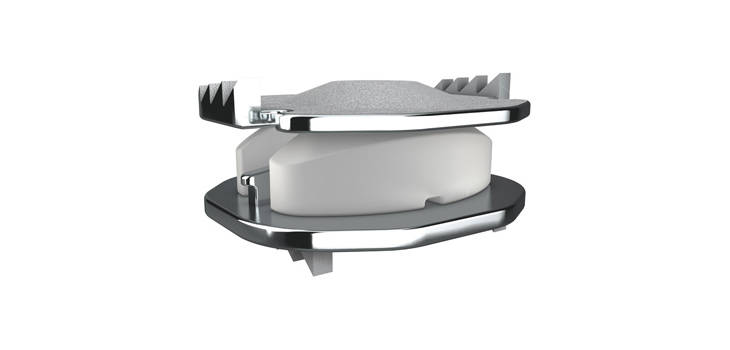
The North American Spine Society supported the application as part of its efforts to support evidence-based medicine and fair coding and reimbursement decisions. LDR’s Mobi-C, which is designed to facilitate both independent and coupled motions similar to natural cervical spine motion, is the only FDA approved cervical disc for both one and two-level cervical arthroplasty procedures.
LDR President and CEO Christophe Lavigne told OTW, “This is an important event for the spine industry, this coding change will provide broader access for patients suffering from both one and two-level cervical disc disease and ease the burdens often faced due to coding and reimbursement policies.”
Author
React:
Discussion
This is a fascinating development. In my practice we've seen similar outcomes with the revised protocol. The key differentiator seems to be patient selection criteria. Has anyone else noticed the correlation with BMI thresholds?
Great point. I'd push back slightly on the conclusion, the sample size in the cited study is too small to draw population-level inferences. That said, the directional signal is compelling and worth a larger RCT.
We implemented a similar approach last year. Early results are promising but we're still gathering 12-month follow-up data. Happy to share our protocol if anyone is interested.
Join the conversation
Orthopedic professionals are discussing this. Sign in and upgrade to read every comment and add your voice.