
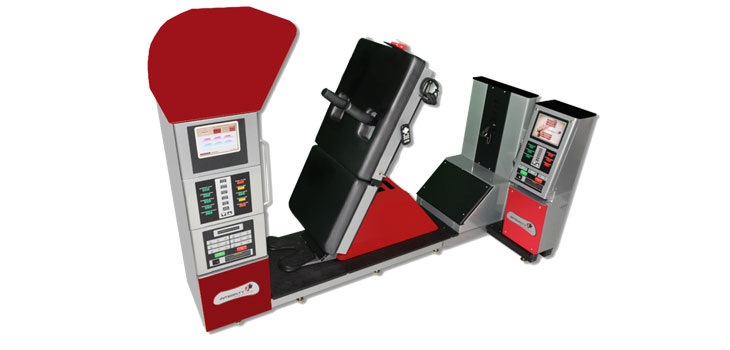
The U.S. FDA has granted further 510(k) clearance to Integrity Life Sciences for a new version of its original device, the Integrity Spinal Care System (ISCS). The nonsurgical medical device applies therapeutic distraction forces to a patient’s spinal column to alleviate low back and neck pain caused by a broad range of spinal disorders. The newest version of the ISCS, which received the most recent clearance, will directly and exclusively target the low back region, or lumbar spine, according to company officials.
Integrity Awarded Additional 510(k) Clearance
1 min read Premium comments
Secondary
Gary Dixon, vice president of sales and marketing of Integrity Life Sciences, said, “The FDA review process for medical devices is very thorough and demanding. Patient safety is of paramount importance with the FDA and gaining an additional market clearance is a major achievement. With this clearance and the upcoming clinical data soon to be released, we will be able to offer our clinicians additional treatment and educational options with a better approach to dealing with the costly treatment of low back pain.”
Dixon explained that Integrity’s medical devices are non-surgical spinal decompression therapy systems engineered to provide pain relief for compressive and degenerative conditions of the spine. Conditions that may be treated include: neck pain and back pain associated with herniated discs, protruding discs, degenerative disc disease, posterior facet syndrome, and sciatica. Dixon said that the treatments achieve these effects through decompression of intervertebral discs. Integrity Life Sciences is located in Tampa, Florida.
Author
React:
Discussion
This is a fascinating development. In my practice we've seen similar outcomes with the revised protocol. The key differentiator seems to be patient selection criteria. Has anyone else noticed the correlation with BMI thresholds?
Great point. I'd push back slightly on the conclusion, the sample size in the cited study is too small to draw population-level inferences. That said, the directional signal is compelling and worth a larger RCT.
We implemented a similar approach last year. Early results are promising but we're still gathering 12-month follow-up data. Happy to share our protocol if anyone is interested.
Join the conversation
Orthopedic professionals are discussing this. Sign in and upgrade to read every comment and add your voice.