
DePuy Synthes Companies announced two new improvements to the company’s Attune Knee System on March 12, 2014 at the annual American Academy of Orthopaedic Surgeons meeting in New Orleans, Louisiana.
DePuy Synthes Adds Features to Attune Knee at AAOS
2 min read Premium comments
Secondary
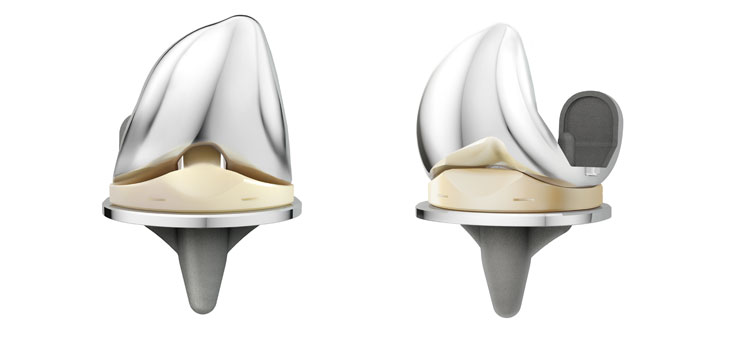
After introducing the Attune system a year ago and implanting more than 31, 000 of the devices during that time, the company added a rotating platform knee and anatomic patella. Both additions have received PMA Supplemental Approval from the FDA.
According to the company, the rotating platform design increases the level of conformity to provide stability while delivering freedom of mobility. In addition, the rotating platform design gives the tibial insert the freedom to self-align and track with the femoral component throughout the range of motion, allowing surgeons the ability to position the rotating platform tibial base on the proximal tibia for maximum bony coverage.
The knee, says the company, builds on the LCS Complete Knee System and the SIGMA Rotating Platform Knee System. More than one million rotating platform knees have been provided for surgeons and patients around the world.
The anatomic patella works with the Attune knee femoral components, is unique to the company and is compatible with both the Attune fixed bearing and rotating platform knees. The patella, according to the company, is designed to have more natural sagittal plane kinematics than traditional dome style patella components. The more natural kinematics can reduce soft tissue interaction with the femoral component and thereby help prevent soft tissue irritation. Also, the unique kinematics of the anatomic patella can increase quadriceps efficiency in deep flexion, allowing the knee to more easily flex and extend.
For instance, studies show that between 10-20% of knee replacement patients are not completely satisfied with their knee replacement. A major contributing factor to this is anterior knee pain in the area of the patella. The anatomic patella was created to help address this need, and is designed to wrap around the knee in a more natural way and improve patella tracking.
Company officials told us that an early performance registry is showing “excellent” results. Multicenter studies are also being performed, but have not yet been completed. Early results, said the officials, are showing an improved range of motion and excellent stability.
Hannah McEwen, Ph.D., the company’s joint reconstruction director for knee product development, said the company was looking to address an unmet patient need. “The introduction of the knee and patella bring new options for patient care.”
Author
React:
Discussion
This is a fascinating development. In my practice we've seen similar outcomes with the revised protocol. The key differentiator seems to be patient selection criteria. Has anyone else noticed the correlation with BMI thresholds?
Great point. I'd push back slightly on the conclusion, the sample size in the cited study is too small to draw population-level inferences. That said, the directional signal is compelling and worth a larger RCT.
We implemented a similar approach last year. Early results are promising but we're still gathering 12-month follow-up data. Happy to share our protocol if anyone is interested.
Join the conversation
Orthopedic professionals are discussing this. Sign in and upgrade to read every comment and add your voice.