
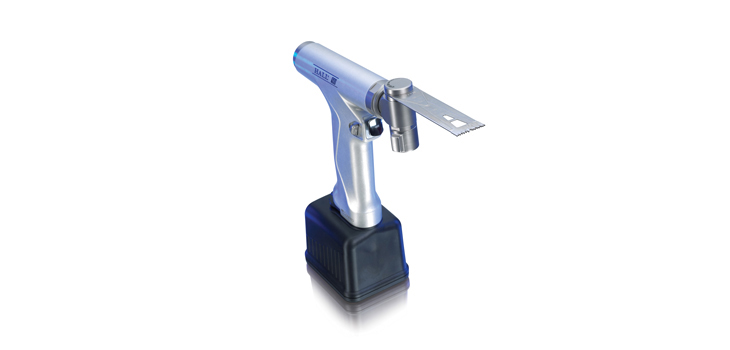
CONMED Corporation is hailing the rollout of its Hall 50 Powered Instruments System. The company’s newest system upgrade is built upon 50 years of engineering expertise. CONMED says that it “hangs its hat” on the quality of its product, offering its customers dependable power.
CONMED Rolls Out Hall Powered Instruments
1 min read Premium comments
Secondary
Some of the features of the Hall 50 are: When used in conjunction with Hall Lithium batteries, the system provides twice the power capacity and twice the operating time of standard batteries. Also, customers can standardize their sets with one modular handpiece that does it all. This helps reduce initial purchasing cost, reduce service and repair cost, and maximize ease of use.
CONMED’s Hall 50 handpieces have incorporated an enhanced epoxy potting. CONMED has gone one step further to protecting its handpieces from the damages of moisture intrusion. The company has added a second layer of epoxy between the controller and the electronic circuit board. This added epoxy prevents electronic failure in the event that moisture does seep into the handpiece. Additionally, the company has redesigned the oscillator head such that it incorporates fewer lower-level components. Vibration is reduced, as is noise, and the redesign provides improved resistance to moisture intrusion.
Senior Product Manager Large Bone Power Danielle Whitlock for CONMED tells OTW, “We are using a new gasket with this design that is made by Trelleborg Seals, a company that manufactures seals for NASA, Boeing, submarines, and off-shore oil rigs. Also interesting is that we worked with an industrial design firm called FARM, who helped us improve the ergonomics of the handpiece. These things will go a long way towards making this system exceptional.”
React:
Discussion
This is a fascinating development. In my practice we've seen similar outcomes with the revised protocol. The key differentiator seems to be patient selection criteria. Has anyone else noticed the correlation with BMI thresholds?
Great point. I'd push back slightly on the conclusion, the sample size in the cited study is too small to draw population-level inferences. That said, the directional signal is compelling and worth a larger RCT.
We implemented a similar approach last year. Early results are promising but we're still gathering 12-month follow-up data. Happy to share our protocol if anyone is interested.
Join the conversation
Orthopedic professionals are discussing this. Sign in and upgrade to read every comment and add your voice.