
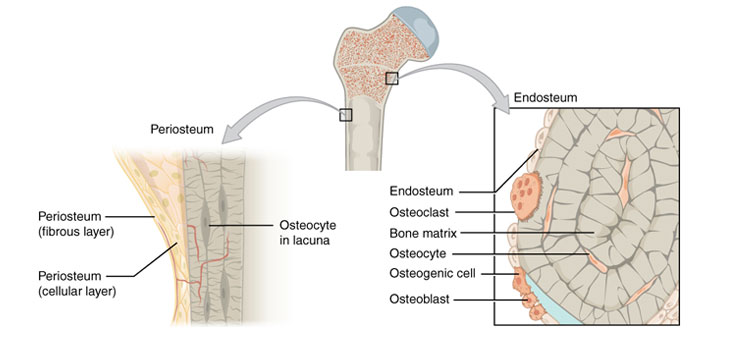
“Waste not want not, ” was a popular adage a generation or two ago. It still applies, according to Melissa Knothe Tate, Ph.D., the Paul Trainer chair of biomedical engineering at the University of New South Wales, Australia. Her research team collected samples of stem cells from the periosteum of patients having joint replacement surgery. The periosteum is the connective tissue in the ball at the very top of the thigh bone—a part that is usually discarded when people have hip replacements.
Stem Cells Taken From Periosteum
1 min read Premium comments
Secondary
Tate and her associates found that this tissue contained stem cells that had “remarkable similarities” to that taken from bone marrow. The cells were similar to bone marrow in terms of their ability to develop into other cells in the lab, according to the research published in the January issue of Stem Cells Translational Medicine. Tate said patients could potentially bank their cells for future use, to help heal bones seriously damaged by such events as car accidents or cancer surgery.
During hip replacement doctors remove part of the top of the thigh bone to make way for the implant. Tate and her associates retrieved the piece of thigh one, removed the periosteum from the top of the bone, collected the tissue to isolate the stem cells and then treated the cells with a growth medium.
In a January 30 article, Amy Cordroy, Health Editor for the Sydney Morning Herald, said that studies on sheep had proved both bone and cartilage could be regrown using the stem cell technique. “This could help people who were born a generation too late to bank their own cord tissues or blood, ” Tate said. Using stem cells taken from a person’s own body, rather than someone else’s, greatly decreased any risk they would suffer an infection or that their body’s immune system would reject them.
Tate said scientists had long realized the potential regenerative power of the periosteum, with reports as early as 1742 that changes to it appeared to result in bone formation.
Author
React:
Discussion
This is a fascinating development. In my practice we've seen similar outcomes with the revised protocol. The key differentiator seems to be patient selection criteria. Has anyone else noticed the correlation with BMI thresholds?
Great point. I'd push back slightly on the conclusion, the sample size in the cited study is too small to draw population-level inferences. That said, the directional signal is compelling and worth a larger RCT.
We implemented a similar approach last year. Early results are promising but we're still gathering 12-month follow-up data. Happy to share our protocol if anyone is interested.
Join the conversation
Orthopedic professionals are discussing this. Sign in and upgrade to read every comment and add your voice.