
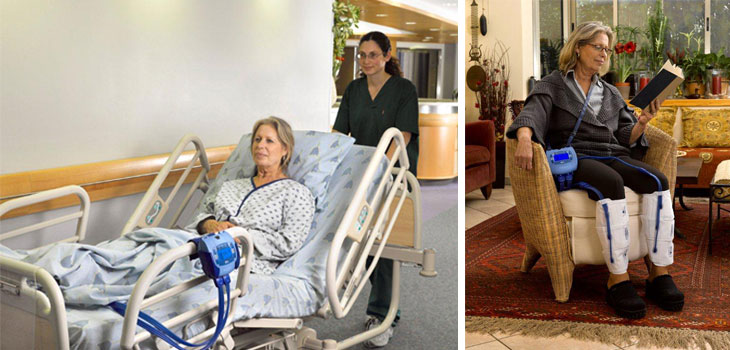
What to do about preventing venous thromboembolisms (DVT) following hip and knee replacement surgery? Supplying an answer is a 3, 060 patient study that was conducted in ten high volume medical centers of the effectiveness of the ActiveCare +SFT mobile compression device. In February editors of the Journal of Bone and Joint Surgery (JBJS) published the study results which showed that the device was equal to blood thinners in preventing DVT and avoided the negative side effects of bleeding complications. The device is small and portable enough for patients to use at home for ten days or longer following their joint replacement surgery.
New JBJS Study: Compression = Thinners in Preventing DVT’s
1 min read Premium comments
Secondary
Professor Clifford Colwell, M.D., who led the research, said, “Blood thinners have long been considered the standard of care to prevent blood clots after orthopedic surgery, but they can have side effects that are concerning for many patients. Through this research we have found and established an equally effective means of accomplishing the same goal with an added layer of safety for patients.”
According to a release from PRNewswire, ActiveCare+SFT is the only device that works by delivering compressions to the leg that coordinate with a patient’s respiration rate which improves blood flow and reduces the risk of blood clot formation in the lower limb. “What orthopedic surgeons are looking for is a prophylactic modality that is effective, acceptable to patients, has minimal side effects, and is cost-effective, ” wrote Professor Piers Yates, MBBS(Hons) BSc(Hons) MRCS FRCS, FRACS in an accompanying special commentary article in the JBJS issue.
ActiveCare+SFT is made by MCS Medical Compression System, a medical device company headquartered in Israel. The CEO, Rick Randall, says that his company’s device is actually “cost effective for health providers as it reduces readmission that results from DVT and complications associated with the use of blood thinners.” He notes that ActiveCare+SFT is the only device that fully meets the ACCP 2012 Guidelines as standalone therapy without the need of drugs to prevent DVT/PE for the whole duration of treatment from hospital to home after total joint replacement. ActiveCare is currently in use in more than 80 surgical centers across the country.
Author
React:
Discussion
This is a fascinating development. In my practice we've seen similar outcomes with the revised protocol. The key differentiator seems to be patient selection criteria. Has anyone else noticed the correlation with BMI thresholds?
Great point. I'd push back slightly on the conclusion, the sample size in the cited study is too small to draw population-level inferences. That said, the directional signal is compelling and worth a larger RCT.
We implemented a similar approach last year. Early results are promising but we're still gathering 12-month follow-up data. Happy to share our protocol if anyone is interested.
Join the conversation
Orthopedic professionals are discussing this. Sign in and upgrade to read every comment and add your voice.