
MedShape, Inc. has announced that it has received FDA 510(k) clearance for its ExoShape Femoral Soft Tissue Fastener for use in soft tissue graft fixation on the femoral side of the knee joint during anterior cruciate ligament (ACL) reconstructive surgery. It is the only femoral fixation device fabricated completely out of PEEK Altera polymer and offers dual locking modes in cancellous bone and at aperture to achieve complete anatomic ACL reconstruction.
MedShape: FDA Clearance for ExoShape
2 min read Premium comments
Secondary
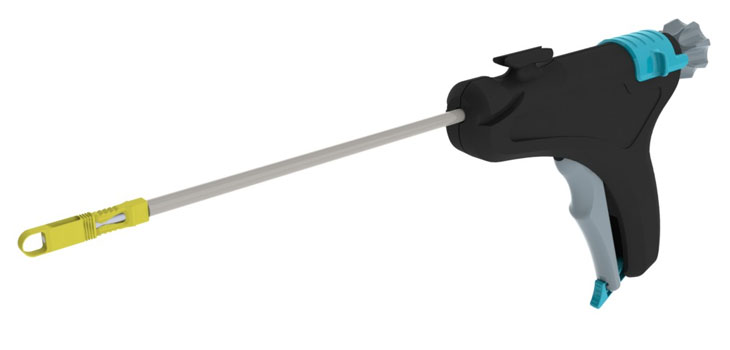
The implant is equipped with several features uniquely designed to accommodate the femoral anatomy and loading conditions. These design features include a Tendon Loop for shuttling the soft tissue graft into the bone tunnel, allowing for at least 20 mm of graft to be placed inside the tunnel. The ExoShape Femoral also has two locking modes that work in congruence to provide secure fixation: Shape Memory Wings that deploy and lock into cancellous bone; Expandable Block Lock technology that provides uniform graft compression and aperture fixation.
Dr. John Uribe of the UHZ Sports Medicine Institute in Coral Gables, Florida, currently uses the tibial version for his ACL procedures and is earnestly awaiting the release of ExoShape Femoral. “The ExoShape Femoral is an unrivaled device with the use of shape memory PEEK to provide effective soft tissue graft compression and fixation as well as an easy insertion method. Applying compression is important with promoting graft to bone healing, ” said Dr. Uribe in the February 4, 2014 news release. “I believe many surgeons will recognize the benefits of this system and adopt it for their ACL reconstruction procedures.”
MedShape indicates that its proprietary shape memory PEEK Altera enables the fastener to be pre-compressed to a low profile for easy insertion, and then fully expanded for effective graft-to-tunnel compression and secure graft fixation. ExoShape’s straightforward, non-rotational insertion and expansion technique preserves the surgeon’s desired soft tissue graft bundle orientation and recreates the anatomic two-bundle ACL at aperture with a single tunnel. Available in sizes 8-11 mm and 21 mm in length, ExoShape Femoral will come pre-loaded on a delivery system with a flexible rod that enables simple tendon shuttling and easy navigation across the joint for both transtibial and anteromedial approaches. The flexible rod and non-rotational deployment mechanism facilitates non-line of sight delivery along a curved path.
Asked where they hope to be in a year with this product, Kurt Jacobus, CEO of MedShape told OTW, “We expect to transition ExoShape Femoral to a full launch within the year, with the use of the product expanded to other soft tissue repair procedures beyond ACL. We also want to have a curved delivery system finalized for transtibial delivery of the device into a tunnel drilled through the anteromedial portal.”
Regarding the development process, he stated, “This product was developed using shape memory PEEK technology. It is the first of MedShape’s PEEK product portfolio to have multiple expanding features using shape memory. These features provide the product with the performance that surgeons have been demanding for their femoral fixation.”
React:
Discussion
This is a fascinating development. In my practice we've seen similar outcomes with the revised protocol. The key differentiator seems to be patient selection criteria. Has anyone else noticed the correlation with BMI thresholds?
Great point. I'd push back slightly on the conclusion, the sample size in the cited study is too small to draw population-level inferences. That said, the directional signal is compelling and worth a larger RCT.
We implemented a similar approach last year. Early results are promising but we're still gathering 12-month follow-up data. Happy to share our protocol if anyone is interested.
Join the conversation
Orthopedic professionals are discussing this. Sign in and upgrade to read every comment and add your voice.