
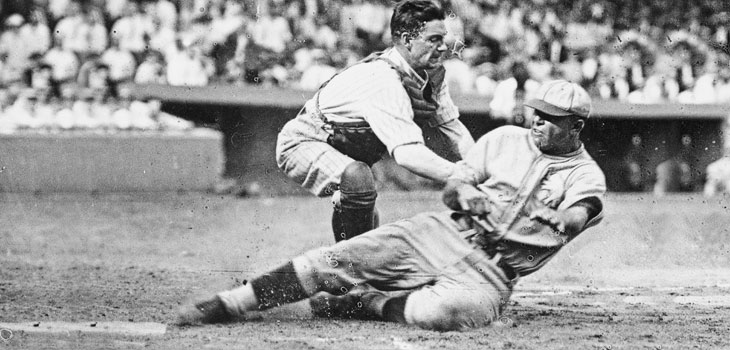
It is the collisions at home plate, when a runner is almost home, that causes the most injuries. Professional baseball players are much more apt to be injured there than in any other type of base-running plays, according to a study led by Daryl Rosenbsaum, M.D., a sports medicine physician at Wake Forest Baptist Medical Center, Illinois.
Home Plate – Baseball’s Danger Zone
1 min read Premium comments
Secondary
Major League Baseball owners recognize that this is a serious problem and have proposed a rule change—still not acted upon—that would reduce the risk of injury when catchers try to block runners heading for home plate.
Researchers looked at data from the 2002 to 2011 baseball seasons and found that plays at home plate resulted in 4.3 times more injuries than other base-running plays. The injuries were severe enough that an average of three players per season had to be placed on the 15-day disabled list.
The injuries also cost teams an average of about $2.3 million a season according to the study, which was published in the International Journal of Sports Medicine. “That’s just the financial impact. More difficult to quantify but also worth considering are the players’ health and the effect of their absences on their teams’ performance, ” said Rosenbaum, in a Wake Forest news release.
“I don’t think fans go to Major League baseball games to see collisions, and I don’t think if you remove them it would change the inherent nature of the game, ” he added. “Why are collisions allowed in this one scenario when they’re not really part of the game?” A collegiate rule already prohibits catchers and other defensive players from blocking home plate and other bases.
Author
React:
Discussion
This is a fascinating development. In my practice we've seen similar outcomes with the revised protocol. The key differentiator seems to be patient selection criteria. Has anyone else noticed the correlation with BMI thresholds?
Great point. I'd push back slightly on the conclusion, the sample size in the cited study is too small to draw population-level inferences. That said, the directional signal is compelling and worth a larger RCT.
We implemented a similar approach last year. Early results are promising but we're still gathering 12-month follow-up data. Happy to share our protocol if anyone is interested.
Join the conversation
Orthopedic professionals are discussing this. Sign in and upgrade to read every comment and add your voice.