
Steve H. Yoon, M.D. has joined the Kerlan-Jobe Orthopaedic Clinic in Los Angeles as a shareholder. Dr. Yoon is a board certified physiatrist and specializes in advanced non-surgical biologic treatments for sports injuries as well as interventional treatments for back and neck pain. Currently, he serves as a consultant to several professional and collegiate teams including the Los Angeles Lakers, Los Angeles Dodgers, Los Angeles Angels of Anaheim, Los Angeles Kings, Anaheim Ducks, Los Angeles Sparks and Loyola Marymount University.
Steve H. Yoon, M.D. Joins Kerlan-Jobe
1 min read Premium comments
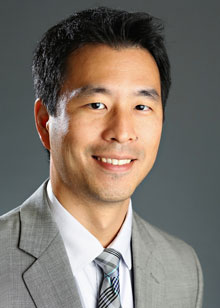
Dr. Yoon joined Kerlan-Jobe in 2010 after completing his fellowship in Pain Medicine at the University of California, Los Angeles and Veterans Affairs Greater Los Angeles Health Care System where he acquired skills using a multidisciplinary approach in the treatment of both acute and chronic pain including the use of medication and image-guided interventional techniques.
Dr. Yoon completed his residency in Physical Medicine and Rehabilitation at NYU Medical Center and the Hospital for Joint Diseases where he was elected and served as Chief Resident. Dr. Yoon began his studies at the University of Alabama at Birmingham where he graduated with a bachelor of science degree in biology. He continued his academic pursuits at the University of Alabama at Birmingham School of Public Health where he earned a master of public health degree followed by a doctor of medicine degree at the University of Alabama School of Medicine. Dr. Yoon completed his internship in Internal Medicine at the University of Massachusetts Medical Center.
Dr. Yoon told OTW, “During my three years at Kerlan-Jobe Orthopaedic Clinic, I have made an asserted effort to utilize biologic treatments as part of the non-surgical management of sports injuries for our patients. The results have been promising and the science continues to evolve. The goal will be to continue to offer these types of non-surgical treatment options along with other innovative minimally-invasive techniques to address our patients’ orthopedic needs.”
React:
Discussion
This is a fascinating development. In my practice we've seen similar outcomes with the revised protocol. The key differentiator seems to be patient selection criteria. Has anyone else noticed the correlation with BMI thresholds?
Great point. I'd push back slightly on the conclusion, the sample size in the cited study is too small to draw population-level inferences. That said, the directional signal is compelling and worth a larger RCT.
We implemented a similar approach last year. Early results are promising but we're still gathering 12-month follow-up data. Happy to share our protocol if anyone is interested.
Join the conversation
Orthopedic professionals are discussing this. Sign in and upgrade to read every comment and add your voice.