
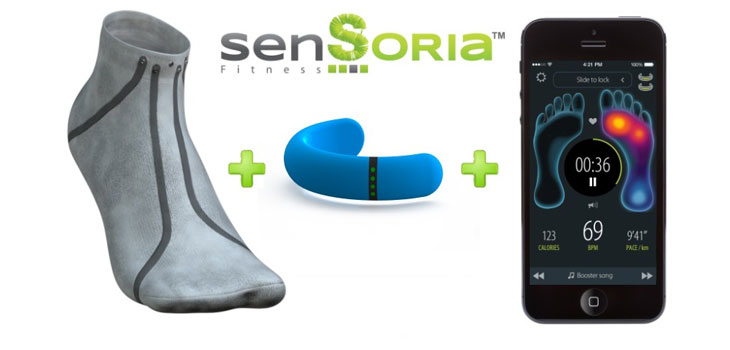
For $175 a pair runners can pull on a pair of “smart socks” that will track how their foot hits the ground, the rhythm of their footfall, count their steps and estimate calories consumed. The manufacturer, Heapsylon, LLC, claims that over time the socks’ sensors will learn how its wearer runs and will alert the wearer to the possibility of injury. The socks made their debut in January at the Consumer Electronic Show in Las Vegas.
Smart Socks Track Runner Experience
1 min read Premium comments
Secondary
To enable them to do what they do, the socks use inbuilt sensors that connect to an ankle bracelet and then, in turn, to a phone. An app will show users “heat maps” of how their feet strike and are impacted by the ground.
Heapsylon representatives say the socks will be available by March. It is working with Vivobarefeet, a British company that makes shoes that conform in a particular manner to the shape of the foot.
The smart socks are among a host of “wearable technologies” including an Internet-connected toothbrush.
Ben Wood, an analyst with CCS Insights, said more than US$100-million had been invested by the public in “wearables.” He claimed their “explosive growth” could mirror tablet sales over the next few years.
Author
React:
Discussion
This is a fascinating development. In my practice we've seen similar outcomes with the revised protocol. The key differentiator seems to be patient selection criteria. Has anyone else noticed the correlation with BMI thresholds?
Great point. I'd push back slightly on the conclusion, the sample size in the cited study is too small to draw population-level inferences. That said, the directional signal is compelling and worth a larger RCT.
We implemented a similar approach last year. Early results are promising but we're still gathering 12-month follow-up data. Happy to share our protocol if anyone is interested.
Join the conversation
Orthopedic professionals are discussing this. Sign in and upgrade to read every comment and add your voice.