
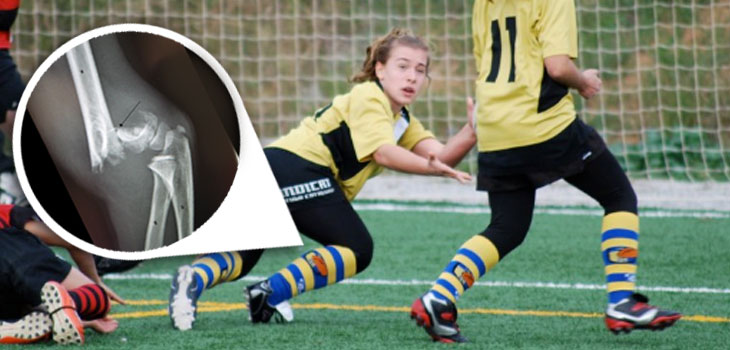
A recent study at Mayo Clinic indicates that certain types of fractures may have implications for a child’s long-term bone health. The study, published in the Journal of Bone and Mineral Research, found evidence that children and adolescents whose forearm fractures occurred due to mild trauma had lower bone strength compared to other children. Lower bone strength may predispose children to osteoporotic fractures later in life.
Pediatric Fractures: Long-Term Implications for Bone Health?
2 min read Premium comments
Secondary
“Our study highlights the need for clinicians to consider the level of trauma preceding the injury, when treating children and adolescents who present with fracture, ” says Joshua Farr, Ph.D., a research fellow at Mayo Clinic in Rochester and lead author of the study, in the January 7, 2014 news release. “Fractures from moderate trauma appear more likely to occur in the setting of normal bone strength. But fractures resulting from mild trauma suggest an underlying skeletal deficit.”
“We can’t say with certainty that these skeletal deficits will track into adulthood. They may be transient, ” Dr. Farr adds. “But we think that trauma classification is a clinical variable that could be used to more closely monitor kids who are suffering mild-trauma fractures. Intervention in terms of diet and physical activity might be used to optimize bone strength.”
The Mayo study compared bone strength in children with recent distal forearm fractures due to mild trauma, children with such fractures due to moderate trauma, and children without fractures. Mild trauma was defined as a fall from a standing height, and moderate trauma was defined as a fall from a relatively low height, such as from a bicycle. The children were aged 8 to 15, and included 108 control participants and 115 boys and girls treated for distal forearm fracture at Mayo within the previous 12 months.
Dr. Farr told OTW, “We were surprised to find that children with a recent distal forearm fracture owing to moderate trauma did not have skeletal deficits since the relationship between DXA-derived bone measures and fracture risk in children has been previously shown to be independent of the level of trauma preceding the injury.”
“Our next step is to define the role of key lifestyle (e.g., diet, physical activity, body composition) and biochemical/hormonal (e.g., sex steroids, parathyroid hormone, vitamin D) factors in modulating the skeletal parameters that discriminate mild trauma fracture patients from non-fracture controls. A better understanding of the modifiable determinants of bone parameters during growth could inform the design of interventions, with the aim of improving skeletal health and reducing fracture risk in children.”
Author
React:
Discussion
This is a fascinating development. In my practice we've seen similar outcomes with the revised protocol. The key differentiator seems to be patient selection criteria. Has anyone else noticed the correlation with BMI thresholds?
Great point. I'd push back slightly on the conclusion, the sample size in the cited study is too small to draw population-level inferences. That said, the directional signal is compelling and worth a larger RCT.
We implemented a similar approach last year. Early results are promising but we're still gathering 12-month follow-up data. Happy to share our protocol if anyone is interested.
Join the conversation
Orthopedic professionals are discussing this. Sign in and upgrade to read every comment and add your voice.