
Researchers at Oxford University and Oxford University Hospital have developed a surgical patch that promotes the rapid growth of tendon tissue and that, if tests prove successful, could transform shoulder repair operations.
Patch Offers Rapid Rotator Cuff Repair
1 min read Premium comments
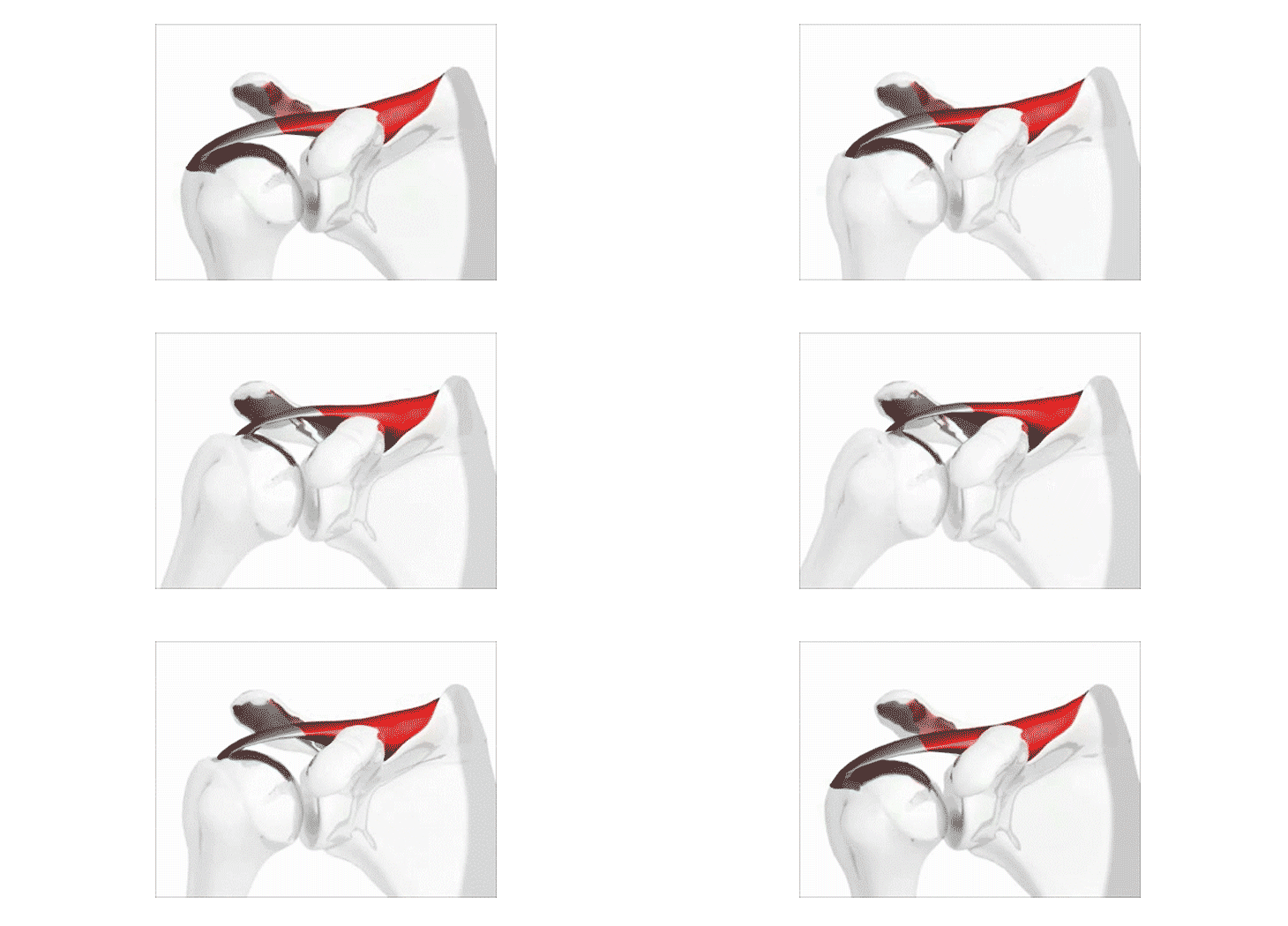
Secondary
Andrew Carr, MA, ChM, FRCS, an UK Oxford University Hospital surgeon and Nuffield Professor of Orthopaedic Surgery at the University of Oxford, led the development of the patch which is designed to repair damage to the rotator cuff—the tendons and muscles that control movement of the shoulder.
Carr described the patch as follows, “The key to the new patch is creating a composite of two material layers. One layer is a very fine “nanoscale” synthetic mesh that is recognized by cells and which promotes growth of new tissue. It provides the physical cues needed for normal growth and development. Because this fine mesh is relatively flimsy, a second woven layer of thicker strands is bonded to it to provide strength. This stronger layer means the scaffold can be sutured in position by a surgeon. It also protects the repair during the six to eight weeks required for tissue healing.”
The scaffold, he says, degrades and is absorbed by the body after three to six months, leaving no foreign material in the long term.
More than 300, 000 rotator cuff repairs are performed in the U.S. each year. The group’s research has shown that between 25% and 50% will fail to heal properly. Patient trials of the new patch are set to begin next year. Carr said, “If successful, the patch has the potential to be adapted for use in other tissue repair operations such as heart surgery, hernia repair, bladder repair and the treatment of early arthritis.”
Author
React:
Discussion
This is a fascinating development. In my practice we've seen similar outcomes with the revised protocol. The key differentiator seems to be patient selection criteria. Has anyone else noticed the correlation with BMI thresholds?
Great point. I'd push back slightly on the conclusion, the sample size in the cited study is too small to draw population-level inferences. That said, the directional signal is compelling and worth a larger RCT.
We implemented a similar approach last year. Early results are promising but we're still gathering 12-month follow-up data. Happy to share our protocol if anyone is interested.
Join the conversation
Orthopedic professionals are discussing this. Sign in and upgrade to read every comment and add your voice.