
Percutaneous image guided lumbar decompression (PILD) for lumbar spinal stenosis (LSS) will now be paid for by the Centers for Medicare and Medicaid Services (CMS) for patients enrolled in an approved CED (Coverage with Evidence Development) clinical study.
CMS Covers PILD for Studies
3 min read Premium comments
Secondary
That’s great news for patients and companies like VertiFlex, Inc. and Vertos Medical Inc.
Treating Spinal Stenosis
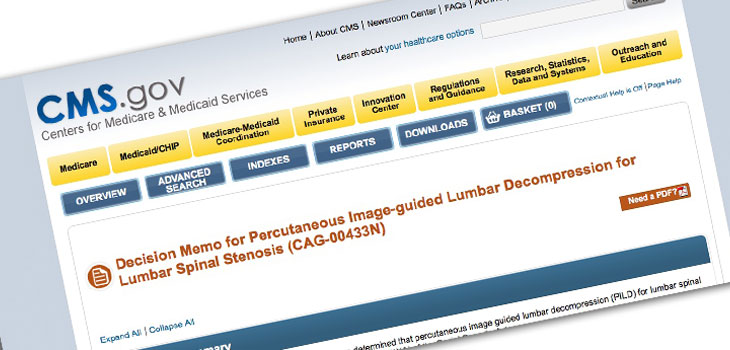
In a Decision Memo published on January 9, 2014, CMS determined that PILD for LSS is not reasonable and necessary for general use.
According to CMS, spinal stenosis is the most common reason for lumbar spine surgery in adults over the age of 65 years. (Weinstein et al. 2008) Spinal stenosis often results from the normal aging process. Surgery for spinal stenosis was reported to be the fastest-growing type of lumbar surgery in the U.S. from 1980 to 2000. Rates of surgery for lumbar stenosis declined slightly from 2002-2007, but use of more complex procedures has increased substantially. (Deyo et al. 2010)
PILD
PILD is a posterior decompression of the lumbar spine performed under indirect image guidance without any direct visualization of the surgical area. “The use of a cannula and trocar provides a portal that allows access to the anatomic area for instruments used for resection. This is a procedure proposed as a treatment for symptomatic LSS unresponsive to conservative therapy. This procedure is generally described as a relatively non-invasive (compared to open surgery) procedure using specially designed instruments to percutaneously remove a portion of the lamina and debulk the ligamentum flavum. The procedure is performed under x-ray guidance (e.g., fluoroscopic, CT) with the assistance of contrast media to identify and monitor the compressed area via epidurogram, ” stated the agency.
Endoscopically assisted laminotomy/laminectomy, which requires open and direct visualization, as well as other open lumbar decompression procedures for LSS are not within the scope of this Decision Memo.
Pathway for Reimbursement
Earl Fender, VertiFlex’s president and CEO, said, “There now exists a pathway for reimbursement for PILD procedures and Totalis [VertiFlex’s system] for Medicare beneficiaries. We appreciate CMS’ leadership in allowing CED, and look forward to working with them to finalize a robust clinical trial protocol.”
The agency said it has a particular interest in improved beneficiary function and quality of life, specific characteristics that identify patients who may benefit from the procedure, and the duration of benefit. The clinical study noted by Fender must address one or more aspects of the following questions in a prospective, randomized, controlled design using current validated and reliable measurement instruments and clinically appropriate comparator treatments, including appropriate medical or surgical interventions or a sham controlled arm, for patients randomized to the non-PILD group.
Study Protocols
“The study protocol must specify a statistical analysis and a minimum length of patient follow-up time that evaluates the effect of beneficiary characteristics on patient health outcomes as well as the duration of benefit.
- Does PILD provide a clinically meaningful improvement of function and/or quality of life in Medicare beneficiaries with LSS compared to other treatments?
- Does PILD provide clinically meaningful reduction in pain in Medicare beneficiaries with LSS compared to other treatments?
- Does PILD affect the overall clinical management of LSS and decision making, including use of other medical treatments or services, compared to other treatments?”
VertiFlex’s procedure involves a small working cannula about the size of a dime, providing physicians the ability to remove targeted ligament, bone, and facet capsule material. A company statement said this broad decompression involves minimal collateral tissue disruption and can be performed under local anesthesia. Totalis was 510(k) cleared by the FDA in November 2012, and has been launched in the U.S.
To read the entire CMS decision memo.
Author
React:
Discussion
This is a fascinating development. In my practice we've seen similar outcomes with the revised protocol. The key differentiator seems to be patient selection criteria. Has anyone else noticed the correlation with BMI thresholds?
Great point. I'd push back slightly on the conclusion, the sample size in the cited study is too small to draw population-level inferences. That said, the directional signal is compelling and worth a larger RCT.
We implemented a similar approach last year. Early results are promising but we're still gathering 12-month follow-up data. Happy to share our protocol if anyone is interested.
Join the conversation
Orthopedic professionals are discussing this. Sign in and upgrade to read every comment and add your voice.