
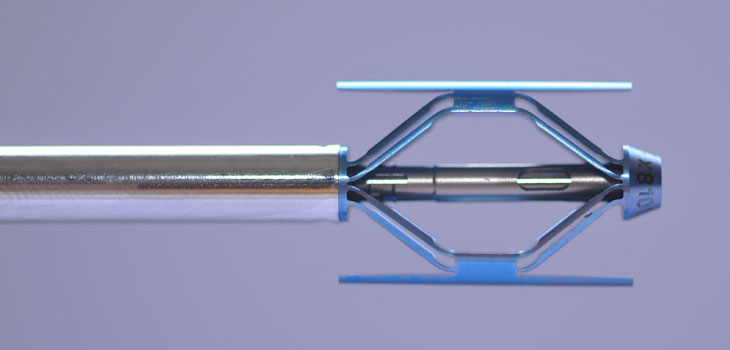
VEXIM, a medical device company specializing in the minimally-invasive treatment of vertebral fractures, has announced that the results of a new comparative biomechanical study carried out by Marburg University’s Traumatology Department have been published in The Spine Journal.
VEXIM: Positive Results for SpineJack
1 min read Premium comments
Secondary
As in the first biomechanical study published (results disclosed on September 12, 2013), the aim of this new study was to evaluate the anatomic restoration of 24 fractured vertebral bodies with osteoporosis by comparing the SpineJack and balloon kyphoplasty techniques. The results once again demonstrated a significant difference in favor of the SpineJack regarding the restoration of vertebral height that is achieved to reestablish spinal balance.
“The central vertebral height restoration was close to 96% for the groups treated with SpineJack. The clinical implications include better restoration of the sagittal balance of the spine and a reduction of the kyphotic deformity, ” said Dr. Antonio Krüger in the December 2, 2013 news release. Dr. Krüger is an orthopedic trauma surgeon in trauma and reconstructive surgery at the Philipp’s University (Marburg) and is the study’s main investigator.
Vincent Gardès, CEO of VEXIM, added, “We are proud of the publication of Dr. Krüger’s new study in such a prestigious clinical and scientific review as The Spine Journal, and would like to congratulate his team for their in-depth scientific work. The results of our biomechanical studies, combined with those announced recently on two other clinical studies, clearly show the efficiency of the SpineJack and reinforce our confidence in our ability to establish it as a benchmark for the treatment of vertebral compression fractures.”
React:
Discussion
This is a fascinating development. In my practice we've seen similar outcomes with the revised protocol. The key differentiator seems to be patient selection criteria. Has anyone else noticed the correlation with BMI thresholds?
Great point. I'd push back slightly on the conclusion, the sample size in the cited study is too small to draw population-level inferences. That said, the directional signal is compelling and worth a larger RCT.
We implemented a similar approach last year. Early results are promising but we're still gathering 12-month follow-up data. Happy to share our protocol if anyone is interested.
Join the conversation
Orthopedic professionals are discussing this. Sign in and upgrade to read every comment and add your voice.