
“Where’s Dr. Durrani?”
Spine Surgeon Under Investigation Disappears
2 min read Premium comments
Secondary
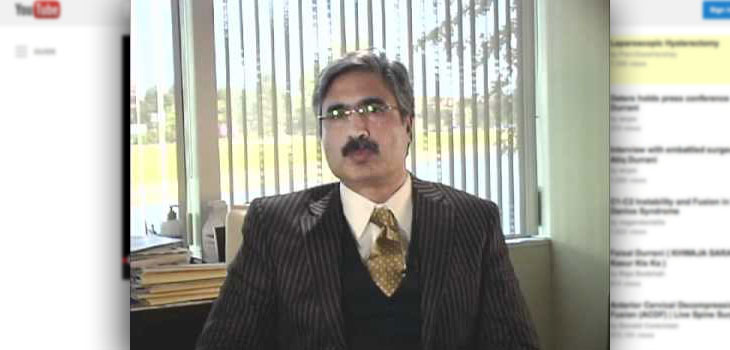
Atiq Durrani, M.D., a Pakistani-born spine surgeon who is under investigation for allegedly billing Medicare for three times as many lumbar spine fusions as anyone in Ohio over three years, has disappeared.
According to WXIX-Fox19 News, the Cincinnati area surgeon was arrested in July for allegedly performing unnecessary surgeries and violating federal healthcare fraud statutes. He was ordered to turn in his passport and post bond. In August the surgeon reportedly asked for permission to visit his ailing father in Pakistan. Permission was denied.
On December 15, 2013, WXIX reported that the U.S. Attorney’s Office said Durrani had fled the country, possibly going to Pakistan. They’ve issued a warrant for his arrest but authorities say they may have a tough time bringing him to justice. Violating his bond will likely add criminal sanctions.
Public Squabble
Durrani and Eric “The Bulldog” Deters, an attorney representing a number of former Durrani patients who are suing the surgeon, have launched numerous YouTube videos in taking their cases to the public. So far, in addition to the federal charges, over 150 civil cases have been filed against Durrani.
In an interview with Cincinnati television reporter Tom McGee, Durrani repeatedly and “categorically” denied performing any unnecessary surgeries or cheating health insurance. He also denied the U.S. Attorney’s claim that some patients suffered “serious bodily injury” as a result of his unnecessary surgery—a claim repeated in some civil suits.
“That is as factually incorrect as it gets, ” Durrani said.
Durrani accused attorney Deters of using “very provocative racial language” to incite patients and the public against him while promising potential clients a huge windfall.
Deters reportedly went on TV in February and called Durrani “the butcher of Pakistan.”
Durrani said a “negligible” number of lawsuits had been filed against him between the time he started working in the area in 1999 and last February of 2013.
“And then this person comes on TV and literally defames, stirs up an entirely unnecessary divisive issue, calls me every single slur, and that starts the whole piling effect. And unfortunately he tells people he’s hitting some gold mine from which…he would like to share, ” Durrani told McGee.
Self-Described Uniquely Skilled
Durrani told the reporter that he is a uniquely skilled spine surgeon with more extensive training than most.
“I am more trained in a dedicated way than probably anybody—not even in this area, but if you look at nationally—I’m one of few people who have received formal training in almost every aspect of spine—from infantile spine all the way to the adult spine, ” Durrani said.
“I take on the most complex cases that no one else will touch, ” he said.
Top Ohio Medicare Biller
The federal complaint alleges Durrani billed Medicare over $11 million from February 2010 through January 2013. That’s an average of over $300, 000 per month.
We will bring you more on this case in an upcoming OTW feature. In the meantime the “Where’s Dr. Durrani?” watch continues.
Author
React:
Discussion
This is a fascinating development. In my practice we've seen similar outcomes with the revised protocol. The key differentiator seems to be patient selection criteria. Has anyone else noticed the correlation with BMI thresholds?
Great point. I'd push back slightly on the conclusion, the sample size in the cited study is too small to draw population-level inferences. That said, the directional signal is compelling and worth a larger RCT.
We implemented a similar approach last year. Early results are promising but we're still gathering 12-month follow-up data. Happy to share our protocol if anyone is interested.
Join the conversation
Orthopedic professionals are discussing this. Sign in and upgrade to read every comment and add your voice.