
A running shoe will soon not be just a running shoe any longer. Through a combination of sensor technology, wireless communication and Smartphone apps, the humble running shoe is being transformed into a monitoring device. According to Jesse Emspak, writing for LiveScience, the new running shoe will monitor how and where the runner’s foot hits the ground, how often, and if the gait is correct.
Smart Shoes Soon to Debut
1 min read Premium comments
Secondary
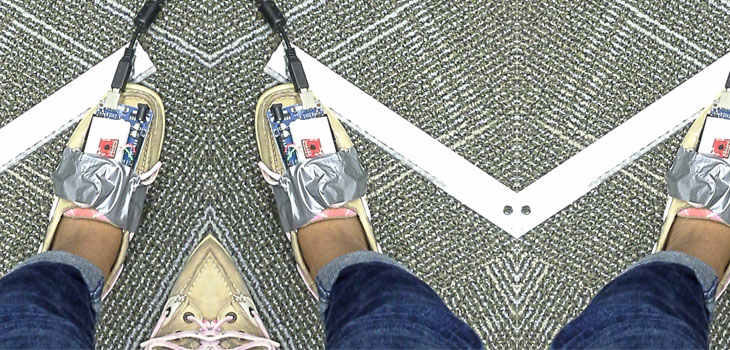
The Fraunhofer Institute in Germany has partnered with other universities and a shoe manufacturer to create a running shoe that has sensors to transmit data to a Smartphone and then on to a computer. The shoes are expected to be smart enough to inform their wearers how to improve their technique and avoid injuries.
Emspak reports that the shoe’s sensor logs data about the runner’s foot speed as it hits the ground, as well as its orientation in space, the duration of contact with the ground and the runner’s stride length. If the phone is out of Bluetooth range, the shoe will also store the data.
That data enables the software to calculate the forces acting on the foot. “It will tell you if the gait is correct, ” said Dr. Andreas Heinig, a scientist at Fraunhofer who manages the wireless Microsystems group (www.runsafer.eu). “The running provides real-time feedback.”
Emspak wrote that there are still experiments to be done to improve the technology before it becomes available to consumers. The shoes could be on store shelves within two years, Heinig told LiveScience.
A U.S. company, Pegasus Sports Performance, Inc. has developed a shoe sensor that, it says, measures eight aspects of the foot’s motion as it hits the ground, including the dynamic of the kick. Pegasus’ system also links to a Smartphone and the Internet.
Author
React:
Discussion
This is a fascinating development. In my practice we've seen similar outcomes with the revised protocol. The key differentiator seems to be patient selection criteria. Has anyone else noticed the correlation with BMI thresholds?
Great point. I'd push back slightly on the conclusion, the sample size in the cited study is too small to draw population-level inferences. That said, the directional signal is compelling and worth a larger RCT.
We implemented a similar approach last year. Early results are promising but we're still gathering 12-month follow-up data. Happy to share our protocol if anyone is interested.
Join the conversation
Orthopedic professionals are discussing this. Sign in and upgrade to read every comment and add your voice.